
Creating a digital product tailored for a credit analyst in the finance sector requires an in-depth understanding of financial data analysis and risk assessment. The product must integrate advanced analytics, real-time data processing, and intuitive visualization tools to enhance decision-making efficiency. Security and compliance with financial regulations are paramount to protect sensitive information. Explore the article to discover detailed strategies for developing a successful digital solution for credit analysts.
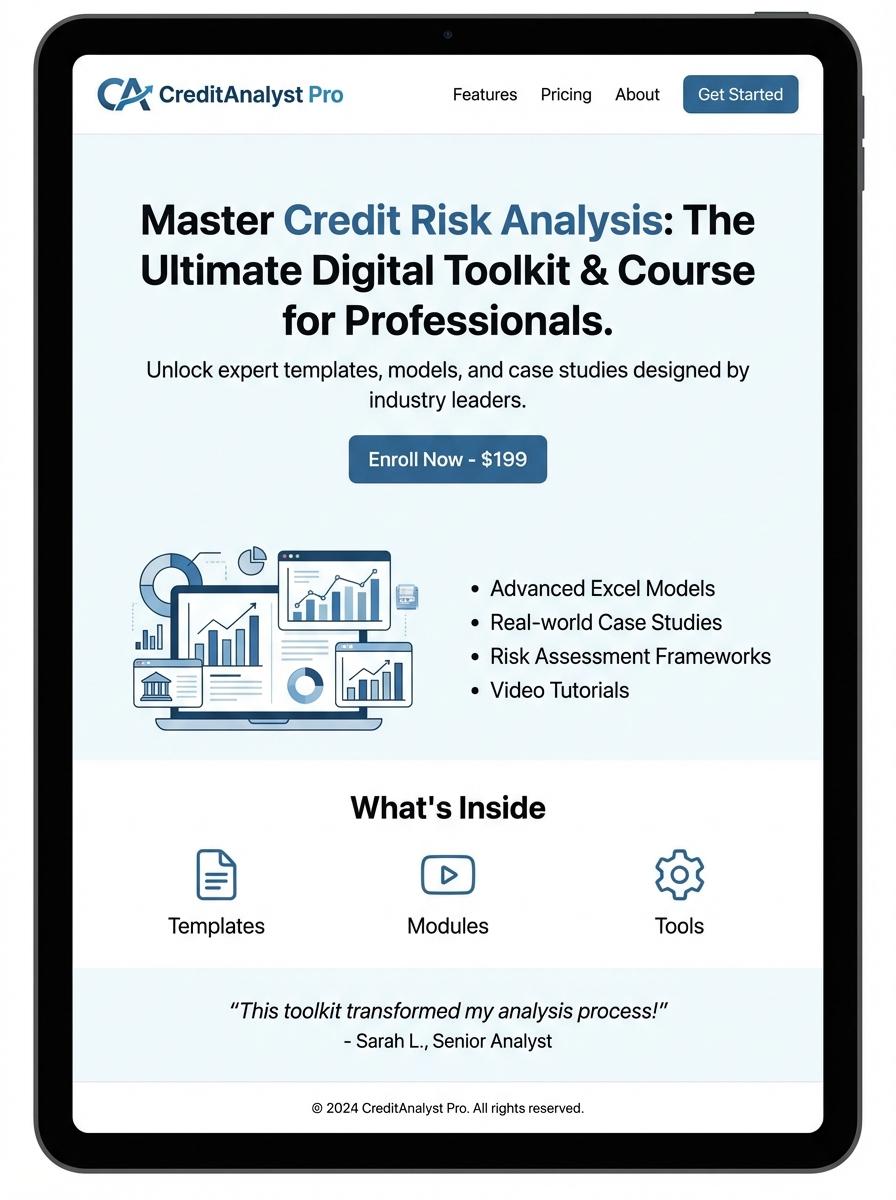
Illustration: Landing page for digital product for Credit analyst
Credit Risk Assessment Report (PDF)
A Credit Risk Assessment Report provides a detailed analysis of a borrower's creditworthiness using financial ratios, payment history, and market conditions. This digital product consolidates data from multiple sources into a clear, concise PDF format for easy interpretation. Accurate risk evaluation enables credit analysts to make informed lending decisions and manage portfolio risk effectively.
- Skills Needed: Financial analysis, risk modeling, data interpretation, and familiarity with credit scoring methodologies.
- Product Requirement: The report must integrate real-time credit data, customizable risk metrics, and generate a professional, printer-friendly PDF.
- Specification: Include graphical visualization of key risk indicators, trend analysis over time, and clear recommendations based on quantitative data.
Financial Ratio Analysis Template (Excel)
Financial Ratio Analysis Template in Excel is designed to streamline the evaluation of a company's creditworthiness by analyzing liquidity, solvency, profitability, and efficiency ratios. This template enables credit analysts to input raw financial data and instantly generate standardized reports for quicker decision-making. Using dynamic formulas, the template reduces human error and provides consistent, comparable metrics across multiple entities.
- Skill needed: Proficiency in Excel functions such as VLOOKUP, IF statements, and PivotTables.
- Product requirement: User-friendly interface with input cells clearly distinguished from output cells to minimize errors.
- Specification: Automated calculation of key credit ratios including Debt-to-Equity, Current Ratio, Interest Coverage, and Return on Assets.
Loan Evaluation Checklist (Word)
A Loan Evaluation Checklist in Word format provides credit analysts with a structured approach to assess loan applications efficiently. It includes criteria such as borrower creditworthiness, collateral adequacy, and compliance with lending policies. This checklist helps standardize the evaluation process, reducing oversight and enhancing decision accuracy.
- Skill Needed: Proficiency in credit risk analysis and financial statement interpretation.
- Product Requirement: Editable Word document with customizable fields and checklist items.
- Specification: Clear categorization of evaluation criteria including borrower data, risk factors, and approval conditions.
Borrower Credit Score Dashboard (Excel)
The Borrower Credit Score Dashboard in Excel provides credit analysts with a comprehensive, real-time visualization of borrower credit data, enabling efficient risk assessment. It integrates multiple credit metrics such as payment history, credit utilization, and score trends in an interactive format. The dashboard enhances decision-making by consolidating data into clear, actionable insights tailored for financial evaluation.
- Skill needed: Proficiency in Excel functions, data analysis, and visualization techniques such as PivotTables and charts.
- Product requirement: Ability to import and update borrower credit data automatically from external databases or spreadsheets.
- Specification: Dashboard must include filters for date ranges, borrower segments, and credit score thresholds with clear graphical representations.
Credit Policy Guidelines Manual (PDF)
A Credit Policy Guidelines Manual tailored for Credit Analysts provides comprehensive instructions on assessing credit risk and managing client profiles effectively. It emphasizes standardized credit evaluation criteria, risk mitigation techniques, and compliance with regulatory frameworks. Clear, concise policies ensure consistent decision-making and support a thorough credit analysis process.
- Skills needed: Expertise in financial analysis, risk assessment, and knowledge of credit regulations.
- Product requirement: The manual must include detailed credit scoring models, sample case studies, and procedural checklists.
- Specification: Deliver a professionally formatted PDF optimized for easy navigation with clickable tables of contents and sections.
Corporate Credit Portfolio Analysis Video Tutorial (MP4)
The Corporate Credit Portfolio Analysis Video Tutorial is designed to enhance the expertise of credit analysts in assessing and managing credit risk across diversified corporate portfolios. It focuses on detailed analytical techniques, portfolio risk metrics, and scenario analysis to improve decision-making accuracy. The MP4 format allows for flexible learning and in-depth review of complex credit assessment strategies.
- Skill needed: Proficiency in financial statement analysis and credit risk evaluation.
- Product requirement: High-definition MP4 video format with segmented chapters for focused learning.
- Specification: Comprehensive coverage of portfolio risk metrics, credit scoring models, and scenario-based stress testing.
Credit Approval Workflow Chart (PDF)
The Credit Approval Workflow Chart PDF outlines a comprehensive process for credit analysts to assess and approve credit applications efficiently. It highlights key decision points including risk evaluation, document verification, and compliance checks essential to minimizing financial exposure. This chart helps streamline credit analysis by providing a clear, standardized workflow framework.
- Skill needed: Proficiency in credit risk assessment and financial statement analysis.
- Product requirement: Clear visualization of each step in the credit approval process with decision nodes and responsible roles.
- Specification: Export-ready PDF format with scalable graphics and accessible annotations for easy reference.
Leverage Data-Driven Insights
Utilizing data-driven insights enables marketers to make smarter credit decisions by understanding customer behaviors and market trends. Analyzing data allows you to refine targeting strategies and optimize campaign performance effectively. This approach ensures that marketing efforts are focused on audiences with the highest potential. Incorporate analytics tools to continuously improve decision-making processes.
Ensure Seamless Integration
Successful marketing requires seamless integration with existing finance systems to streamline operations and enhance user experience. Integrating your digital product with current infrastructure reduces friction for clients and accelerates adoption. It also facilitates real-time data sharing, improving responsiveness and service quality. Prioritize compatibility to support smooth workflows and enhance customer satisfaction.
Utilize Real-Time Risk Assessment
Real-time risk assessment and portfolio monitoring are critical for adapting marketing strategies in dynamic financial environments. Instant insights help identify potential risks and opportunities, allowing swift adjustments to campaigns. This proactive approach reduces losses and maximizes profitability. Emphasize tools that provide continuous monitoring to stay ahead of market fluctuations.
Adopt Scalable Solutions
Marketing success depends on scalable solutions that grow with evolving credit landscapes. Flexible platforms accommodate increasing user bases and expanding product lines without compromising performance. Scalability ensures sustained innovation and competitive advantage in digital finance markets. Choose technologies that support long-term growth and adaptability.
Focus on Compliance and Reporting
Enhanced compliance and regulatory reporting capabilities build trust and ensure legal adherence in marketing digital financial products. Transparent reporting demonstrates accountability and protects your business from penalties. Include features that simplify compliance management and automate reporting processes. Maintaining regulatory standards boosts brand credibility and customer confidence.