
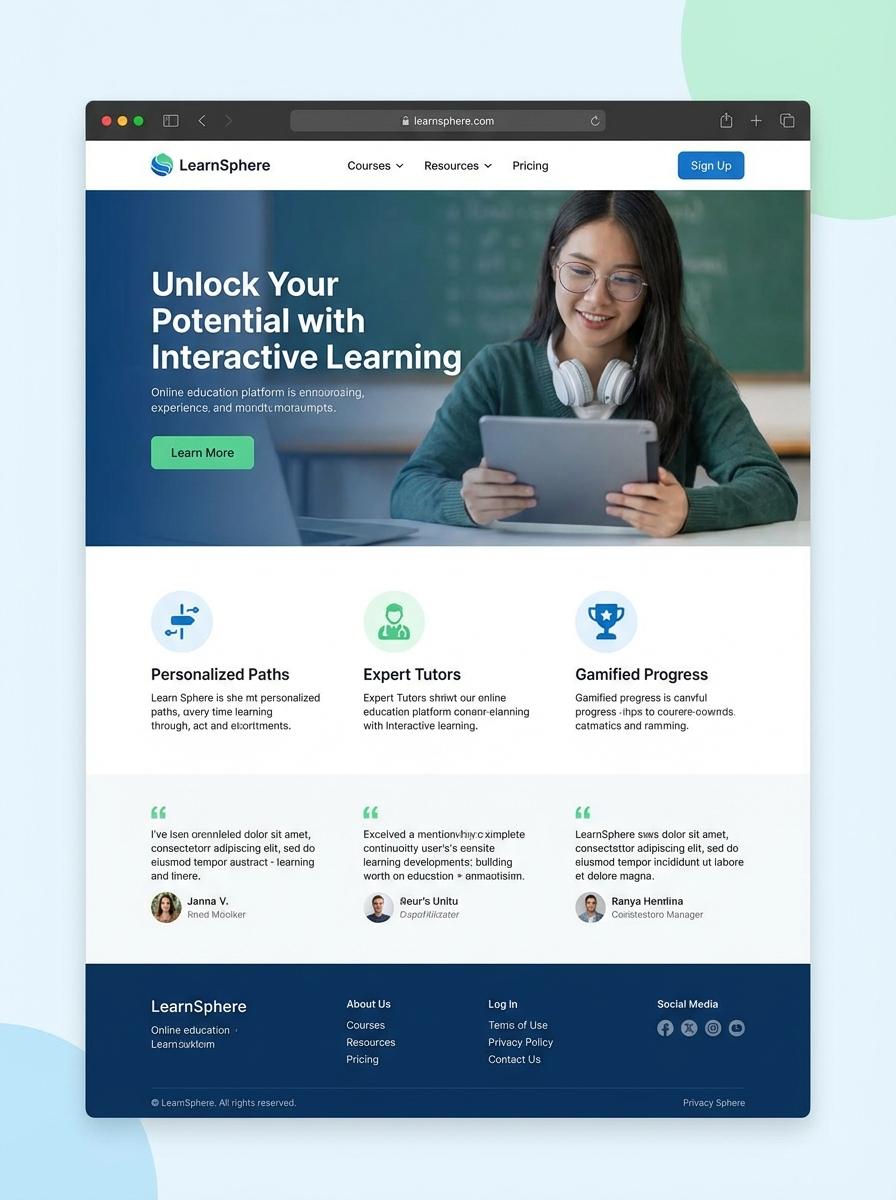
Illustration: Landing page for digital product in Making Digital Products in Education Industry
Curriculum Alignment and Standards Compliance
Creating digital products in the education industry requires strict curriculum alignment to ensure that content matches established educational standards. This ensures that students receive instruction that is both appropriate and effective for their grade level. Adhering to standards compliance also simplifies the approval process for schools and districts.
User-friendly Interface and Accessibility
A user-friendly interface is crucial to engage both students and educators in digital learning environments. Products must be designed with accessibility in mind to support diverse learners, including those with disabilities. Intuitive navigation and clear visuals contribute to a seamless educational experience.
Interactive and Engaging Content
Interactive content such as quizzes, simulations, and multimedia enhances student engagement and learning retention. Digital products should incorporate varied activities that encourage active participation. Engaging materials motivate students to explore concepts more deeply and support differentiated instruction.
Data Privacy and Student Security
Ensuring data privacy and security is paramount when developing educational digital products. Protecting student information requires compliance with laws like FERPA and GDPR. Secure platforms build trust with schools, parents, and learners, fostering a safe digital environment.
Adaptive Learning and Personalization
Adaptive learning technologies tailor educational pathways to individual student needs, promoting effective learning outcomes. Personalization adjusts content difficulty and pace based on real-time performance data. This approach supports diverse learner profiles for optimized growth and mastery.
Seamless Integration with Existing Systems
To maximize utility, digital education products must offer seamless integration with existing school systems such as LMS and SIS platforms. Smooth interoperability minimizes disruptions and streamlines administrative workflows. Integration enables educators to manage resources efficiently within a unified digital ecosystem.
Ongoing Support and Regular Updates
Continuous support and regular updates ensure that digital products remain current with educational standards and technology advances. Responsive customer service addresses user issues promptly, enhancing satisfaction and long-term adoption. Frequent updates also introduce new features and improve system security.
