
Creating a digital product for civil engineers in the construction sector requires understanding the unique challenges they face, such as project management, structural analysis, and site monitoring. The product should streamline workflows, improve collaboration, and enhance data accuracy through user-friendly interfaces and real-time updates. Integrating BIM tools, cost estimation, and compliance tracking features can significantly boost productivity and project outcomes. Explore the article for an in-depth guide to designing effective digital solutions tailored to civil engineering professionals.
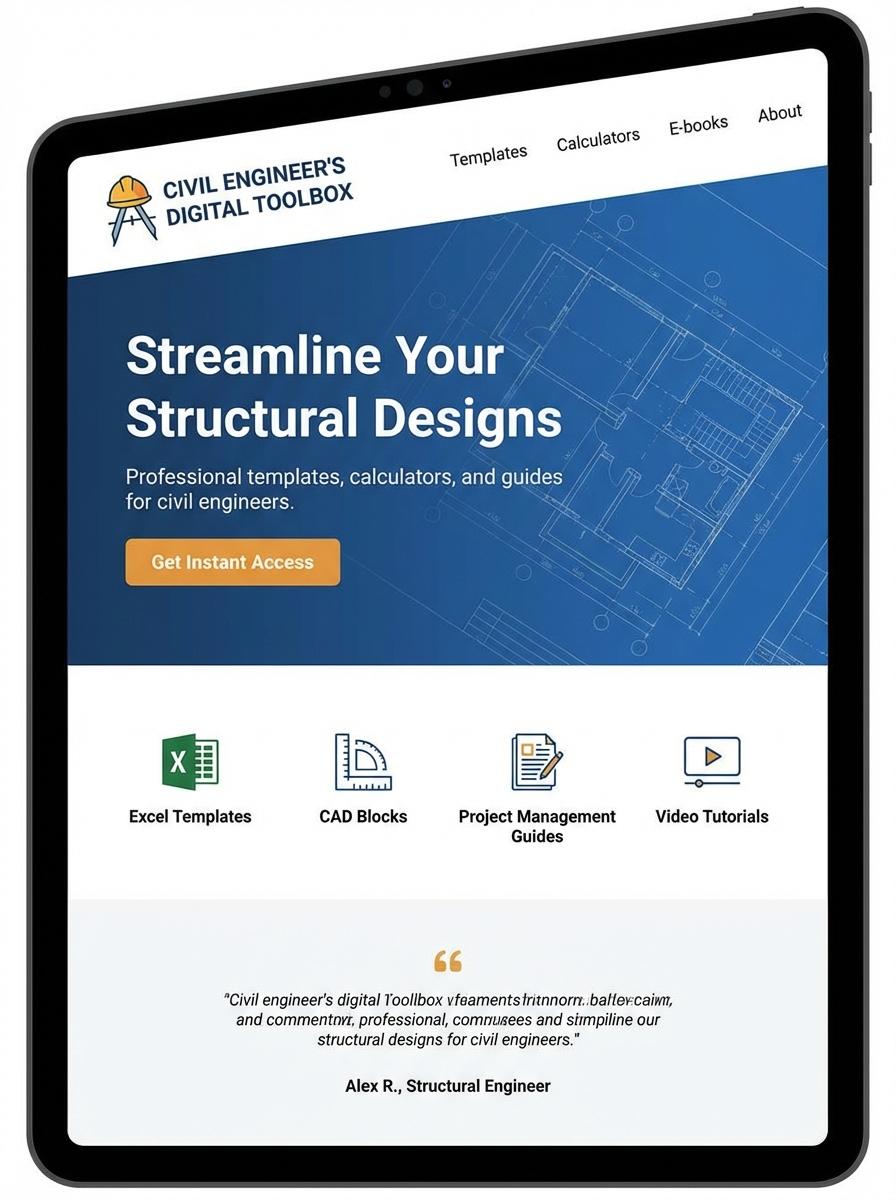
Illustration: Landing page for digital product for Civil engineer
Construction Project Management Templates (Excel/Doc)
Construction project management templates in Excel and Doc formats streamline the organization and tracking of project timelines, budgets, and resource allocations for civil engineers. These templates enhance productivity by providing customizable fields tailored to construction phases, material requirements, and labor management. Accurate data entry in these templates supports risk analysis and compliance with engineering standards.
- Skills needed: Proficiency in Microsoft Excel and Word, understanding of construction project lifecycle, and knowledge of civil engineering principles.
- Product requirements: Editable templates with pre-built formulas for cost estimation, scheduling charts, and documentation sections for permits and inspections.
- Specifications: Compatibility with standard office software, user-friendly interface for data input, and options for printable and digital use.
Structural Design Calculation Sheets (Excel/PDF)
Structural Design Calculation Sheets are essential tools for civil engineers to perform accurate load analysis, material strength assessment, and structural integrity verification. These sheets streamline complex calculations into clear, organized formats, improving efficiency and reducing errors in project design. Customizable Excel and PDF templates ensure adherence to engineering standards and facilitate easy documentation and sharing.
- Proficiency in structural engineering principles and calculation methodologies.
- Excel templates must include formulas for load combinations, bending moments, shear forces, and deflections.
- PDF output should be well-formatted, printable, and compatible with professional engineering documentation standards.
Site Safety Manuals and Checklists (PDF)
Site Safety Manuals and checklists in PDF format are essential tools for civil engineers to ensure compliance with safety regulations and minimize onsite risks. These documents outline critical safety procedures, risk assessments, and emergency protocols tailored for construction environments. Customizable checklists facilitate systematic safety audits and promote proactive hazard identification.
- Skill Needed: Proficiency in civil engineering safety standards and regulatory requirements.
- Product Requirement: Clear, editable PDF format compatible with mobile and desktop devices.
- Specification: Inclusion of checklist items addressing equipment safety, worker PPE, and site hazard zones.
Bill of Quantities (BOQ) Templates (Excel)
The Bill of Quantities (BOQ) Templates in Excel are essential tools for civil engineers to systematically estimate project costs and quantities. These templates streamline the budgeting and procurement process by organizing detailed information on materials, labor, and equipment. Accurate BOQs enable efficient project planning and resource allocation in civil engineering projects.
- Skill needed: Proficiency in Excel functions, civil engineering project estimation, and quantity surveying techniques.
- Product requirement: User-friendly interface with customizable fields for units, rates, and quantities specific to civil works.
- Specification: Compatibility with Excel 2016 or later versions, including formulas for automatic cost calculations and summary reports.
Construction Method Statement Templates (Doc/PDF)
A Construction Method Statement Template is essential for civil engineers to clearly outline project procedures and safety measures. These templates provide standardized documentation that ensures compliance with industry regulations and effective communication among stakeholders. Utilizing customizable formats in Doc or PDF enhances accessibility and adaptability for various project scopes.
- Skill Needed: Proficiency in civil engineering project management and regulatory compliance.
- Product Requirement: Editable .doc and non-editable .pdf formats for flexibility and secure sharing.
- Specification: Clear layout with sections for risk assessment, equipment use, and step-by-step workflow.
AutoCAD Block Libraries (DWG)
AutoCAD Block Libraries (DWG) provide a comprehensive set of pre-designed, reusable components tailored for civil engineering projects. These libraries enhance productivity by enabling quick insertion of standardized elements such as pipes, manholes, and terrain features. Efficient use of DWG blocks ensures accuracy and consistency in civil design documentation.
- Proficiency in AutoCAD software and knowledge of civil engineering standards.
- Block libraries must include scalable and parametrically adjustable DWG files.
- Blocks should be organized with clear naming conventions and layer management for easy access and modification.
Training Video Tutorials on Construction Software (Video)
Training video tutorials on construction software offer Civil Engineers practical guidance on utilizing tools like AutoCAD, Revit, and Primavera to enhance project planning and execution. These tutorials focus on real-world applications, demonstrating step-by-step workflows tailored to civil engineering tasks such as structural design, site layout, and resource management. Effective tutorials improve technical proficiency, reduce errors, and accelerate project timelines in the construction industry.
- Skill needed: Proficiency in construction software basics and civil engineering concepts.
- Product requirement: High-definition video quality with clear screen captures and voice narration.
- Specification: Include downloadable project files and quizzes for hands-on practice and knowledge assessment.
Streamline Project Workflows with Innovative Digital Tools
Utilizing cutting-edge digital tools tailored for civil engineers can significantly streamline project workflows. These tools enable efficient task management, resource allocation, and progress tracking. By integrating such technology, teams can reduce manual errors and optimize every stage of project development. This leads to faster completion times and improved overall performance.
Enhance Design Accuracy and Efficiency
Advanced engineering software plays a critical role in boosting design accuracy and efficiency. These platforms offer precise modeling, real-time simulations, and error detection to minimize costly revisions. Incorporating this software ensures that digital products meet high standards and client expectations. Enhanced accuracy ultimately elevates product quality and reliability.
Boost Team Collaboration through Cloud-Based Solutions
Cloud-based project management solutions facilitate seamless team collaboration regardless of location. They provide centralized access to documents, real-time communication, and task assignment features. This fosters transparency, accountability, and efficient coordination between team members. Improved collaboration accelerates project progress and aligns goals effectively.
Accelerate Project Delivery with Automation and Smart Analytics
Automation and smart analytics technologies allow marketing teams to speed up product delivery cycles. Automation handles repetitive tasks while analytics provide actionable insights to optimize decision-making. This results in time savings and better allocation of resources. Utilizing these technologies ensures timely product launches and enhanced market competitiveness.
Ensure Compliance and Data Security with Reliable Platforms
Maintaining compliance and data security is vital when marketing digital products. Reliable digital platforms offer robust security protocols, data encryption, and regulatory compliance features. These safeguards protect sensitive information and build customer trust. Prioritizing security elevates brand reputation and mitigates potential risks.