
Creating a digital product suitable for architects in the construction sector requires a keen understanding of their unique workflows, design challenges, and collaboration needs. Such a product must streamline project management, enhance precision in architectural designs, and facilitate seamless communication between teams. Incorporating intuitive design tools and real-time data updates ensures increased efficiency on construction sites. Discover the detailed ideas and strategies in the full article.
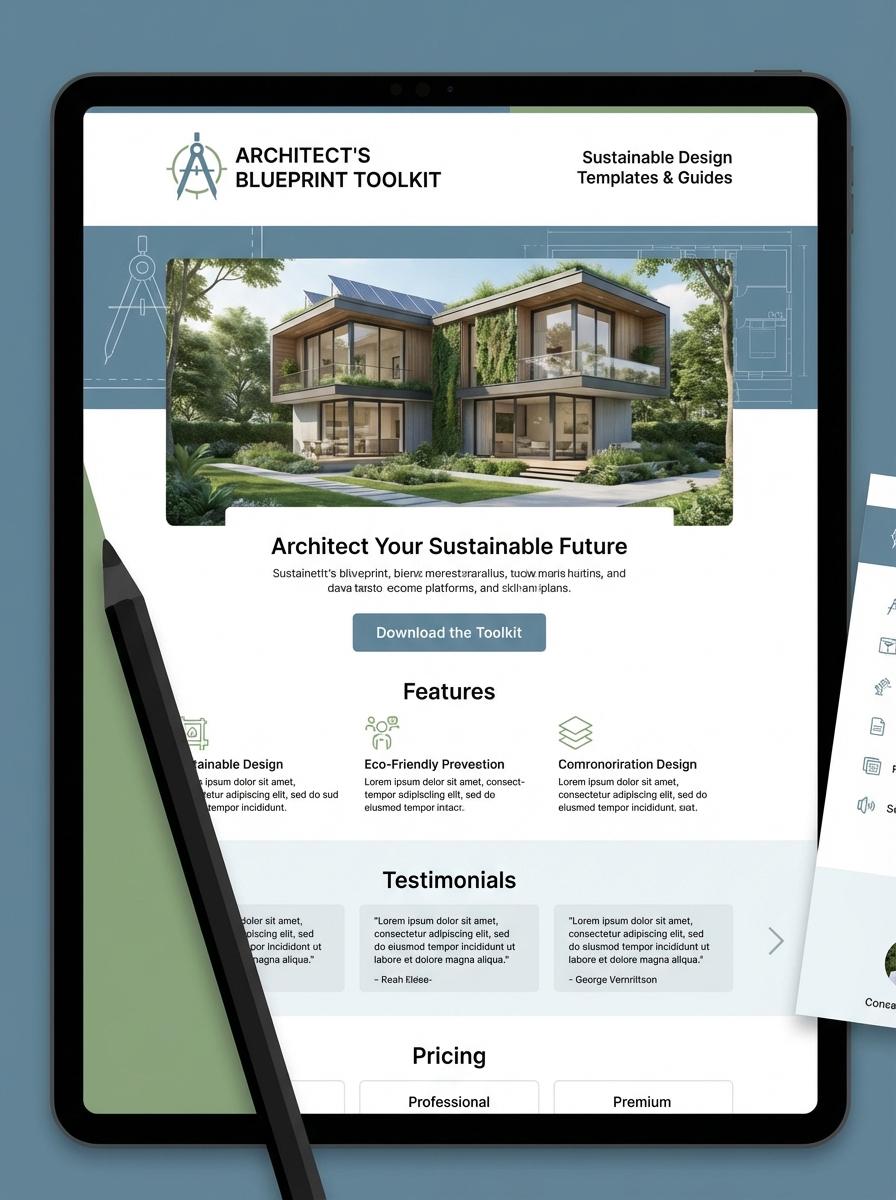
Illustration: Landing page for digital product for Architect
BIM (Building Information Modeling) Template Files
BIM (Building Information Modeling) Template Files streamline architectural workflows by providing standardized, reusable models that enhance project consistency. These templates incorporate predefined layers, families, and annotation styles aligned with industry standards such as ISO 19650. Utilizing BIM template files reduces errors and improves collaboration across multidisciplinary teams in construction projects.
- Skill needed: Proficiency in BIM software (e.g., Autodesk Revit) and understanding of architectural design standards.
- Product requirement: Templates must include customizable families, predefined views, and annotation parameters tailored for architects.
- Specification: Compatibility with current BIM software versions and compliance with regional building codes and documentation protocols.
Construction Detail CAD Blocks
Construction Detail CAD Blocks are essential resources for architects, streamlining the design process by providing precise, reusable components for building elements such as walls, doors, and windows. These blocks enhance accuracy in architectural drawings, reducing errors and saving time in documentation. Architectural CAD Blocks improve collaboration between design and construction teams through standardized detailing.
- Skill needed: Proficiency in CAD software (AutoCAD, Revit) and deep understanding of architectural construction details.
- Product requirement: High-quality, scalable vector blocks compatible with major CAD platforms, categorized by building components and systems.
- Specification: Blocks should include metadata for easy search, be dimensionally accurate, and follow industry standards like AIA or ISO.
Architectural Presentation Templates (PowerPoint or InDesign)
Architectural Presentation Templates are designed to streamline the display of architectural projects, supporting clear visual storytelling and professional client presentations. These templates, compatible with PowerPoint and InDesign, incorporate layout grids, customizable slide masters, and architectural iconography to enhance data visualization. They prioritize usability for architects, ensuring efficient communication of complex design concepts.
- Skill needed: Proficiency in PowerPoint and InDesign, basic graphic design principles, architectural visualization techniques.
- Product requirements: Fully customizable slides, vector-based graphics, adherence to architectural drawing standards, easy-to-edit text placeholders.
- Specifications: Compatible with latest versions of PowerPoint and Adobe InDesign, high-resolution imagery support, print-ready and digital presentation formats.
Project Management Spreadsheets (Excel)
Project Management Spreadsheets for architects streamline the tracking of project timelines, budgets, and resource allocation. Customized Excel templates enable detailed documentation of design phases and client feedback, enhancing workflow efficiency. The use of dynamic Gantt charts and cost estimation tools supports precise project oversight and timely decision-making.
- Skill needed: Proficiency in Excel functions such as pivot tables, conditional formatting, and data validation for accurate project tracking.
- Product requirement: Integration of architectural task categories, milestone tracking, and budget monitoring features tailored for design projects.
- Specification: User-friendly interface with customizable templates that accommodate various project scales and stages within architectural workflows.
Standard Specification Documents (PDF or DOC)
Standard Specification Documents are essential for architects to clearly communicate project requirements, material standards, and construction methods. These documents ensure consistency and compliance with building codes, enabling streamlined collaboration among stakeholders. Using a well-structured PDF or DOC format enhances accessibility and professional presentation.
- Skill Needed: Proficiency in technical writing and knowledge of architectural terminology.
- Product Requirement: Compatibility with popular design software and easy export options to PDF or DOC formats.
- Specification: Clear sections for materials, construction standards, and regulatory compliance.
Construction Sequence Animation Videos
Construction Sequence Animation Videos provide architects with a dynamic visualization tool to illustrate the step-by-step development of building projects. These animations enhance communication with clients and contractors by clearly demonstrating the construction process and project timeline. They also aid in identifying potential design conflicts before physical work begins.
- Proficiency in 3D modeling software such as Revit, SketchUp, or AutoCAD is essential.
- High-quality rendering capabilities and compatibility with animation software like Lumion or Blender are required.
- Animations must accurately represent construction phases, sequencing, and incorporate realistic timing and material details.
Site Analysis Report Templates
Site Analysis Report Templates are essential for architects to systematically evaluate environmental, legal, and infrastructural factors affecting a project. These templates streamline data collection on topography, climate, zoning laws, and existing utilities. Using a standardized site analysis template ensures accuracy and consistency in project planning and presentations.
- Skill needed: Proficiency in architectural design principles and knowledge of site surveying techniques.
- Product requirement: Customizable sections for environmental data, zoning regulations, and infrastructure details.
- Specification: Clear layout optimized for both digital use and printable formats, compatible with common document editing software.
Streamline Workflows with Intuitive Digital Tools
Utilizing intuitive digital tools helps architects simplify complex processes, reducing time spent on repetitive tasks. These tools provide clear interfaces that enhance user experience and minimize errors. By streamlining workflows, teams can focus more on creativity and project development. This approach boosts overall productivity and client satisfaction.
Boost Project Efficiency and Collaboration
Effective collaboration is essential in architectural design. Digital platforms enable real-time communication and file sharing, ensuring seamless teamwork. Improved efficiency results from teams working concurrently without delays or misunderstandings. Such tools foster transparency and stronger partnerships within design teams.
Deliver Stunning Visuals with Advanced Rendering
Advanced rendering features allow architects to create high-quality visual presentations that impress clients and stakeholders. These visuals accurately represent design intent, aiding decision-making and feedback. Utilizing realistic images and animations enhances project appeal and marketing effectiveness. Ultimately, superior presentations contribute to winning proposals and contracts.
Seamless Integration with CAD and BIM Software
Integration with leading CAD and BIM software ensures a smooth transition between design stages. This compatibility reduces data loss and rework by maintaining consistency across platforms. Architects benefit from consolidated workflows, saving time and resources. It also supports collaborative efforts across diverse software environments.
Scalable Solutions for Architectural Firms
Digital marketing tools offer scalable solutions that adapt to firms of varying sizes and project scopes. Whether a small studio or large enterprise, customized features meet specific business needs. Scalability promotes sustainable growth and flexibility in managing resources. This adaptability is vital for maintaining competitiveness in the digital marketplace.