
Creating a digital product tailored for a VoIP engineer in the telecommunications sector requires a deep understanding of network protocols, voice quality optimization, and real-time data processing. Such a product must support seamless integration with existing telecom infrastructure and offer robust diagnostics for call management and security. Focusing on scalability and user-friendly interfaces ensures the tool meets the evolving demands of VoIP professionals. Explore the article for detailed ideas on developing effective digital solutions for VoIP engineers.
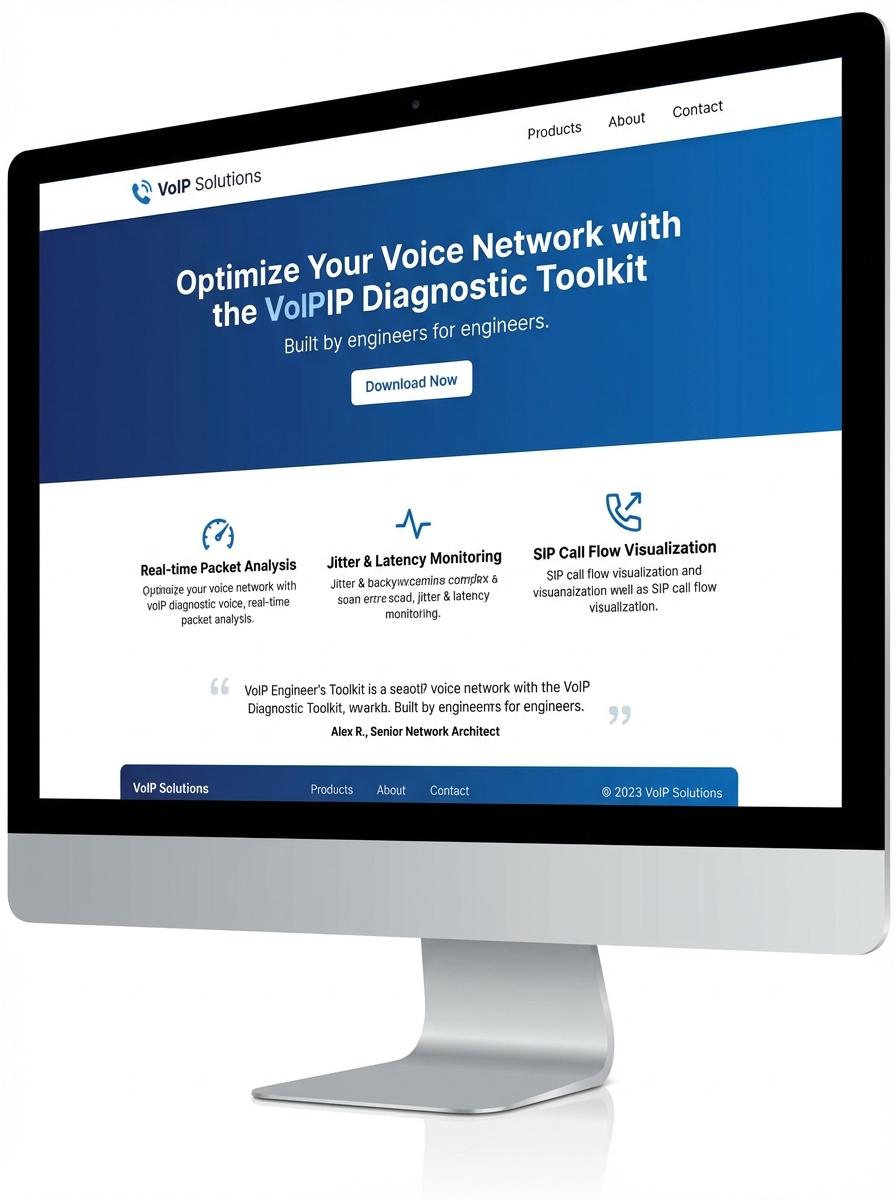
Illustration: Landing page for digital product for VoIP engineer
VoIP Network Design Templates (Excel/Visio files)
VoIP engineers require precise network design templates to plan and deploy efficient voice over IP systems that ensure quality and reliability. These templates, available as Excel spreadsheets and Visio diagrams, streamline the documentation of network topologies, bandwidth calculations, and hardware configurations. Consistent use of these tools enhances project management and reduces deployment errors in complex VoIP environments.
- Skill needed: Proficiency in VoIP protocols (SIP, H.323), network topology design, and familiarity with Excel and Visio software.
- Product requirement: Editable and customizable Excel and Visio templates including bandwidth calculators, device mapping, and call flow diagrams.
- Specification: Templates must support clear visual representation of network paths, standard VoIP symbols, and integration options for real-time data inputs.
SIP Trunk Configuration Guides (PDF/Doc)
Creating SIP Trunk Configuration Guides involves detailed documentation of settings essential for successful VoIP integration. These guides serve as a reference for engineers to configure trunk parameters, handle codec negotiation, and troubleshoot connection issues. Accurate and clear instructions reduce deployment time and improve system reliability.
- Comprehensive knowledge of SIP protocol and VoIP network architecture.
- Product must support common signaling and media codecs, and provide examples for popular PBX systems.
- Specifications should include configuration steps, error code explanations, and troubleshooting tips.
VoIP Security Checklist (PDF)
VoIP Security Checklist is a critical document designed to help VoIP engineers systematically evaluate and enhance the security of VoIP networks. It covers essential aspects such as encryption protocols, firewall configurations, and authentication mechanisms. This checklist ensures that vulnerabilities are minimized and compliance with industry standards is maintained.
- Skill Needed: In-depth knowledge of VoIP protocols (SIP, RTP) and network security principles.
- Product Requirement: The checklist must include detailed steps for identifying common VoIP attack vectors like SIP hijacking and eavesdropping.
- Specification: Provide clear guidelines on implementing encryption, secure authentication, and firewall rules tailored for VoIP environments.
Call Quality Monitoring Dashboards (Excel)
Call Quality Monitoring Dashboards in Excel provide VoIP engineers with real-time analytics on call performance metrics such as jitter, latency, and packet loss. These dashboards facilitate the identification of network issues and support proactive maintenance. Data visualization and custom reporting enable targeted optimization of VoIP service quality.
- Skills needed: proficiency in Excel functions, pivot tables, VBA scripting, and understanding of VoIP protocols and QoS parameters.
- Product requirement: ability to import and process SIP call records and network performance logs seamlessly.
- Specification: dashboard must include dynamic charts for MOS scores, call drop rates, and network latency with user-friendly filtering options.
Interactive Troubleshooting Flowcharts (PDF)
Interactive troubleshooting flowcharts for VoIP engineers enhance diagnostic efficiency by guiding through complex network and protocol issues step-by-step. These flowcharts incorporate key VoIP components such as SIP, RTP, and QoS parameters, ensuring precision in fault identification. The use of PDF format allows for universal accessibility and interactive elements like clickable decision points.
- Skill needed: Understanding of VoIP protocols (SIP, RTP) and network troubleshooting techniques.
- Product requirement: Interactive PDF with hyperlink-enabled decision nodes for seamless navigation.
- Specification: Clear visual hierarchy with labeled flow steps and embedded troubleshooting criteria.
Training Video on VoIP Fundamentals
The Training Video on VoIP Fundamentals targets VoIP engineers aiming to enhance their expertise in Voice over IP technology. It covers essential topics such as SIP protocols, network configuration, codec selection, and troubleshooting techniques. Practical demonstrations ensure engineers gain a thorough understanding of real-world VoIP system implementation and management.
- Skill needed: Proficiency in network protocols, particularly SIP and RTP.
- Product requirement: High-quality video with clear audio and labeled diagrams for complex concepts.
- Specification: Include scenario-based labs and troubleshooting exercises for hands-on learning.
VoIP Number Portability Best Practices Handbook (PDF)
VoIP Number Portability involves transferring a telephone number from one service provider to another without service interruption. Efficient number portability depends on thorough knowledge of local and national regulatory frameworks, as well as technical protocols like SIP and ENUM. Mastering the intricacies of routing, provisioning, and database synchronization ensures seamless migration and optimal user experience.
- Skilled in SIP signaling, ENUM, LNP (Local Number Portability) processes, and telephony regulations.
- Comprehensive handbook in PDF format detailing step-by-step porting procedures and troubleshooting guides.
- Specification includes clear diagrams, checklists, and case studies for effective number portability execution.
Targeted Messaging for VoIP Pain Points and Solutions
Creating targeted messaging that addresses specific VoIP pain points is essential for successful marketing. Focus on common issues such as call quality, latency, and ease of use. Clearly communicate how your digital product offers effective solutions tailored to these challenges. This approach builds trust and relevance with your audience.
Demonstrate Seamless Integration with Existing IT Infrastructure
Highlighting the seamless integration of your VoIP solution with current IT systems reassures customers of minimal disruptions. Emphasize compatibility with various hardware and software environments. Providing detailed technical documentation and easy onboarding steps further encourages adoption. This demonstrates your product fits naturally into established workflows.
Highlight Reliability, Scalability, and Security Features
Reliability is a cornerstone for VoIP products, ensuring uninterrupted communication. Promote scalability to show your product can grow with business needs, accommodating increased users or traffic. Additionally, emphasize robust security features to protect sensitive data and maintain compliance. These qualities position your product as a trustworthy and long-term solution.
Offer Technical Support and Transparent Service-Level Guarantees
Providing exceptional technical support builds confidence among VoIP users, offering assistance whenever needed. Clearly outline service-level guarantees to demonstrate commitment to uptime and performance. Transparency in these areas reduces buyer hesitation and differentiates your offering. Reliable support and guarantees contribute to customer satisfaction and loyalty.
Showcase Customer Testimonials and Proven ROI for VoIP Engineers
Leveraging authentic customer testimonials adds credibility to your marketing efforts. Share real-world success stories that highlight how VoIP engineers have benefited from your solution. Present tangible metrics that demonstrate a strong return on investment (ROI). This evidence convinces prospects of your product's value and effectiveness.