
Creating a digital product tailored for an Infrastructure Manager in the Telecommunications sector requires a deep understanding of network architecture and operational challenges. The solution must streamline asset management, enhance real-time monitoring, and support efficient maintenance workflows. Prioritizing scalability and integration with existing systems ensures the product meets evolving industry demands. Explore the article for detailed strategies on developing such a specialized digital product.
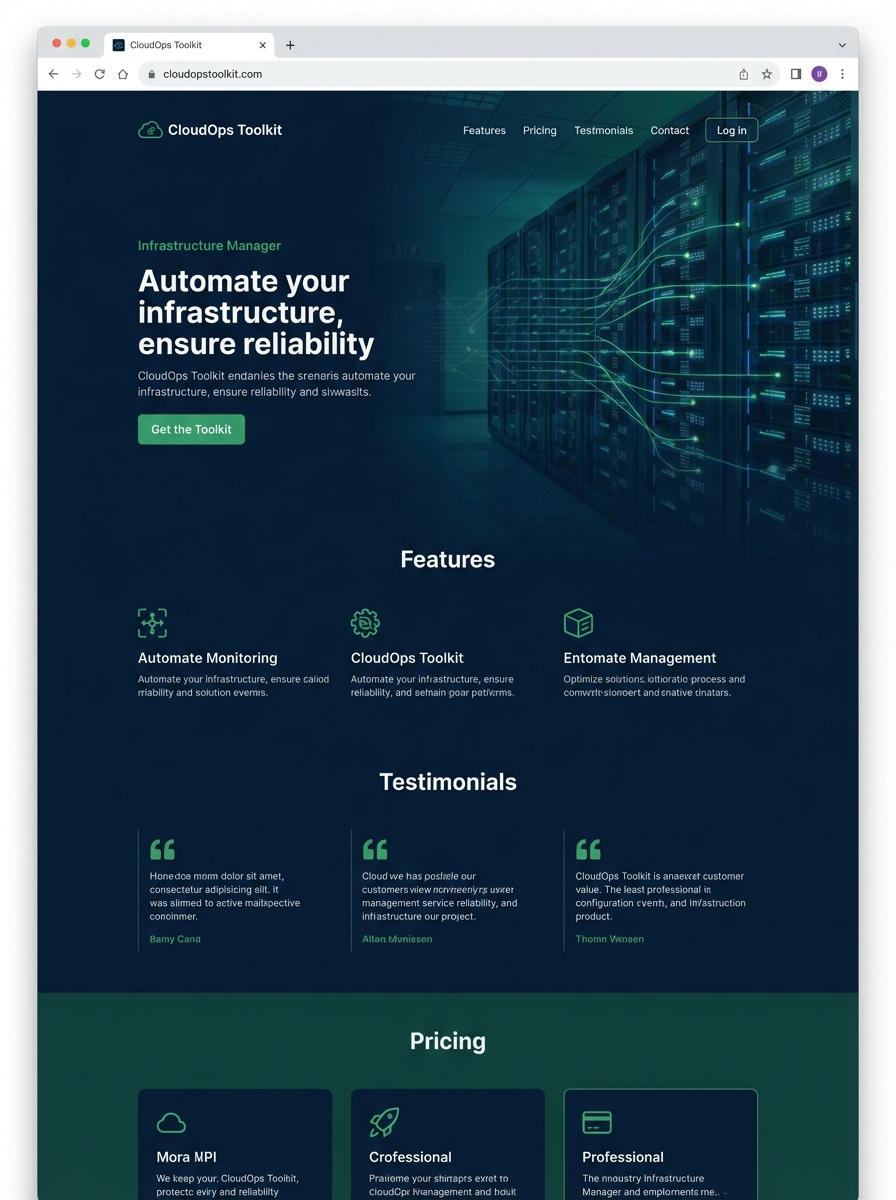
Illustration: Landing page for digital product for Infrastructure manager
Network Infrastructure Audit Report Template (PDF/Doc)
The Network Infrastructure Audit Report Template is designed to assist Infrastructure Managers in systematically documenting network components, configurations, and compliance status. It includes sections for detailed hardware and software inventories, risk assessments, and performance metrics. This template ensures comprehensive evaluation and facilitates decision-making for network upgrades or troubleshooting.
- Skills needed: Network analysis, risk assessment, technical writing
- Product requirements: Editable format (PDF and DOC), standardized sections for hardware, software, compliance, and recommendations
- Specifications: Clear layout for audit data entry, ability to export or print, support for annotations and summaries
Telecommunications Asset Inventory Spreadsheet (Excel)
The Telecommunications Asset Inventory Spreadsheet in Excel allows Infrastructure Managers to systematically track and manage network equipment and related assets. It provides an organized framework for recording critical details such as asset location, status, model numbers, and maintenance schedules. This tool enhances asset visibility, ensuring efficient resource allocation and minimizing downtime.
- Skill needed: Proficiency in Excel functions including tables, data validation, and pivot tables for dynamic reporting.
- Product requirement: Capability to input and categorize asset information such as device type, serial number, and geographic location.
- Specification: Integration options for importing/exporting CSV data to support synchronization with other asset management systems.
Infrastructure Risk Assessment Checklist (PDF/Doc)
An Infrastructure Risk Assessment Checklist is essential for infrastructure managers to systematically identify and mitigate potential vulnerabilities within physical and digital assets. This checklist outlines critical risk factors including structural integrity, cybersecurity threats, and compliance with industry regulations. Using this document ensures proactive management and continuous improvement of infrastructure safety and reliability.
- Skill needed: Proficiency in risk management principles and familiarity with infrastructure systems.
- Product requirement: Checklist must be available in editable formats such as PDF and DOC for easy customization.
- Specification: Should include sections for risk identification, evaluation, mitigation strategies, and regulatory compliance checkpoints.
Fiber Optic Installation Guide (PDF)
The Fiber Optic Installation Guide (PDF) provides detailed steps for Infrastructure Managers to efficiently plan and execute fiber optic network setups. It covers critical installation techniques, safety standards, and compliance regulations to ensure reliable and high-performance connectivity. Emphasis on structured cabling, splicing methods, and equipment handling optimizes the deployment process.
- Skills needed: Understanding of fiber optic technology, cable handling expertise, and knowledge of safety protocols.
- Product requirements: Clear diagrams, step-by-step procedures, and comprehensive troubleshooting tips.
- Specifications: Compatibility with various fiber types, adherence to industry standards like TIA/EIA, and inclusion of maintenance schedules.
Data Center Layout Planning Tool (Excel)
Infrastructure managers require efficient tools to design and optimize data center layouts for maximum space utilization and operational efficiency. The Data Center Layout Planning Tool in Excel enables precise mapping of physical assets, power distribution, and cooling systems. It integrates capacity planning with real-time data visualization to support decision-making and maintenance scheduling.
- Skill Needed: Proficiency in Excel functions, data visualization, and understanding of data center infrastructure components.
- Product Requirement: Ability to input and dynamically update rack positions, power loads, and cooling zones within a spreadsheet interface.
- Specification: Include customizable templates for different data center sizes and layouts, with automated reporting on space, power usage, and airflow metrics.
Infrastructure Maintenance Schedule Template (Excel)
The Infrastructure Maintenance Schedule Template in Excel is designed for infrastructure managers to systematically track and plan routine upkeep. This template facilitates the monitoring of equipment status, maintenance dates, and resource allocation, promoting operational efficiency. Clear visualization of maintenance timelines helps in preventing downtime and extending asset lifespan.
- Skill needed: Proficiency in Excel functions like conditional formatting, formulas, and data validation.
- Product requirement: A customizable grid layout with columns for asset ID, maintenance type, scheduled date, technician, and status.
- Specification: Should include automated alerts for upcoming maintenance tasks and a dashboard summary for quick performance overview.
Video Tutorial on Network Topology Optimization (Video)
Network topology optimization improves the efficiency and performance of communication systems by structuring device interconnections. Infrastructure managers benefit from understanding network design principles to reduce latency and increase fault tolerance. This tutorial delivers actionable insights for optimizing infrastructure at scale.
- Skill Needed: Proficiency in network architecture and IT infrastructure management.
- Product Requirement: High-definition video format supporting clear visuals of topology diagrams.
- Specification: Duration of 45-60 minutes with segmentation for different types of network topologies.
Streamline Infrastructure Operations with Automation
Utilizing automation allows you to reduce manual tasks, saving time and minimizing errors in your infrastructure operations. Automate repetitive processes to improve efficiency and focus on strategic activities that drive growth. Adopting automation tools enhances scalability and supports rapid deployment of your digital product.
Scalable Solutions for Dynamic IT Environments
Design your digital product to support scalability across changing IT environments, ensuring it adapts effortlessly to growing user demands. Scalable solutions allow seamless resource allocation and performance management. This flexibility enhances customer satisfaction and sustains long-term success in competitive markets.
Enhance Security and Compliance Effortlessly
Prioritize security and compliance by integrating robust protections and adhering to industry standards early in the product lifecycle. Automated security protocols help mitigate risks without hampering operations. Ensuring compliance builds trust and safeguards your brand reputation in the digital marketplace.
Real-Time Performance Monitoring and Analytics
Implement real-time monitoring and analytics to gain valuable insights into product usage and system health. Immediate visibility enables proactive issue resolution and informed decision-making. Leveraging data helps optimize features and personalize marketing strategies for better user engagement.
Seamless Integration with Existing Tools and Platforms
Ensure your digital product supports seamless integration with popular tools and platforms to maximize adoption and usability. Compatibility reduces customer onboarding time and simplifies workflows. A well-integrated product enhances the overall user experience and drives increased market penetration.