
Creating a digital product suitable for graphic designers in the media sector requires a deep understanding of their unique workflow and creative needs. Tools must offer intuitive interfaces, versatile design capabilities, and seamless integration with other media applications to enhance productivity and creativity. Prioritizing features like customizable templates, collaborative options, and high-resolution output ensures the product stands out in a competitive market. Explore the article to discover detailed ideas on developing the perfect digital product for graphic designers.
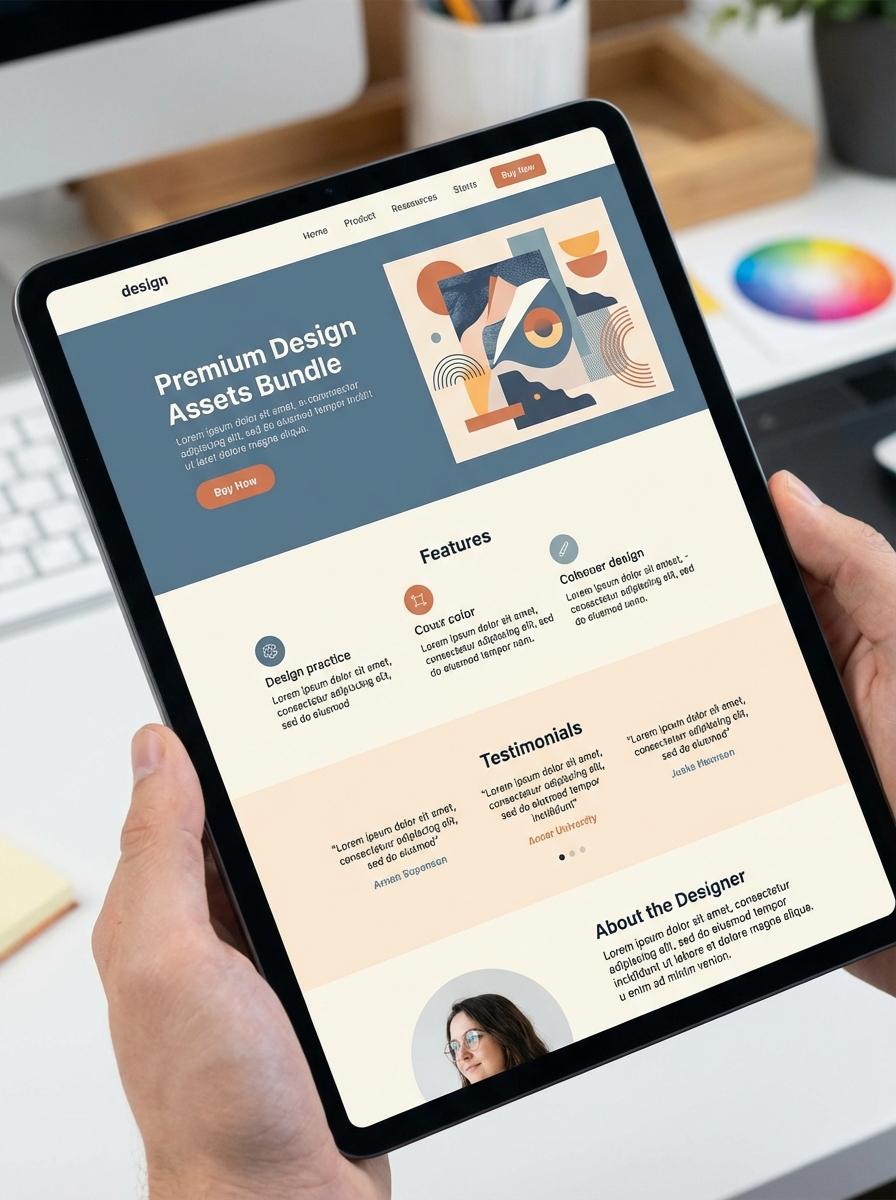
Illustration: Landing page for digital product for graphic designer
Social Media Branding Templates (e.g., Instagram posts, Facebook covers)
Graphic designers develop Social Media Branding Templates tailored for platforms like Instagram and Facebook, enhancing brand visibility and consistency. These templates incorporate key visual elements, such as color schemes, typography, and logos, that align with client branding. Efficient use of editable layers and vector shapes ensures adaptability across various social media needs.
- Skill needed: Proficiency in Adobe Photoshop, Illustrator, or similar design tools to create flexible, layered templates.
- Product requirement: Templates must be easily customizable, maintaining high resolution suitable for both mobile and desktop display.
- Specification: Include predefined styles and guidelines for fonts, color palettes, and image placements to ensure brand consistency.
E-book or Magazine Layout Designs (PDF format)
Creating E-book or Magazine Layout Designs in PDF format involves combining typography, imagery, and user experience principles to ensure readability and visual appeal. Designers must consider the target audience, platform compatibility, and responsive layout adaptability. Effective use of grids, white space, and consistent styling enhances content hierarchy and engagement.
- Skill needed: Mastery of Adobe InDesign, Adobe Illustrator, or similar layout software and strong understanding of typography and color theory.
- Product requirement: High-resolution PDF output optimized for digital devices and print, maintaining embed fonts and accessible navigation features like hyperlinks and bookmarks.
- Specification: Design layouts must include versatile templates, accommodate different page sizes, and ensure compatibility with standard e-readers and PDF viewers.
Motion Graphics Intro Videos
Creating Motion Graphics Intro Videos involves combining graphic design principles with animation techniques to craft visually engaging video openers. These videos are tailored to enhance brand recognition and convey messages quickly through dynamic visuals and concise storytelling. Mastery in software like After Effects and an understanding of timing and transitions are essential.
- Proficiency in animation software such as Adobe After Effects and Cinema 4D.
- High-resolution video export capabilities (minimum 1080p) with transparent backgrounds.
- Compatibility with various video editing platforms to ensure seamless integration.
Infographic Packs (PDF/PNG files)
Graphic designers require expertise in visual hierarchy, color theory, and typography to create compelling Infographic Packs. Mastery of design software such as Adobe Illustrator or Photoshop ensures high-quality PDF and PNG outputs. Attention to detail guarantees clarity and effective communication of data in digital formats.
- Skill Needed: Proficiency in vector graphics and image editing tools.
- Product Requirement: Deliverables must include layered, editable PDF files and optimized PNG images.
- Specification: Infographics should be scalable, color-calibrated, and designed for various screen resolutions.
Presentation Slide Deck Templates (PPT, Keynote)
Creating presentation slide deck templates requires an understanding of layout balance, visual hierarchy, and branding consistency. Graphic designers should tailor templates for compatibility with PPT and Keynote formats. Effective templates enhance communication by combining aesthetics with functional slide transitions and placeholders.
- Skill needed: Proficiency in graphic design software (Adobe Illustrator, Photoshop, or similar) and presentation tools (PowerPoint, Keynote)
- Product requirement: Templates must be fully editable with customizable slide masters and adaptable color schemes
- Specification: Include a variety of slide layouts (title, content, infographics) and ensure high-resolution graphics in standard aspect ratios
Printable Media Kits (PDF)
Creating a Printable Media Kit in PDF format involves designing a professional layout that conveys essential brand information clearly and attractively. Graphic designers must focus on high-resolution images, cohesive typography, and organized content sections like company overview, audience demographics, and pricing. The goal is to produce a visually engaging and easy-to-navigate document ideal for print distribution or digital sharing.
- Skill needed: Expertise in graphic design software such as Adobe InDesign or Illustrator
- Product requirement: High-resolution, print-ready PDF format with bleeds and crop marks
- Specification: Consistent brand colors, fonts, and clear layout hierarchy for readability
Customizable Press Release Templates (DOC format)
Graphic designers require customizable press release templates in DOC format to efficiently create professional and consistent media communications. These templates must include editable text fields, standard formatting styles, and placeholders for brand logos and images. Such design assets enhance productivity and ensure brand alignment across all press releases.
- Skill Needed: Proficiency in Microsoft Word and understanding of press release structure.
- Product Requirement: Templates in DOC format with editable sections and brand asset placeholders.
- Specification: Include customizable header, footer, and layout styles suitable for print and digital distribution.
Showcase Unique Design Portfolio Online
Creating a unique design portfolio online is essential to attract attention in the crowded digital marketplace. Highlight your best work with clear visuals that demonstrate your style and skills. Use an easy-to-navigate website layout to enhance user experience and keep potential clients engaged. Including detailed project descriptions helps showcase your problem-solving abilities and creative process.
Target Niche Graphic Design Communities
Focusing on niche graphic design communities allows you to reach an audience that values your specific expertise. Engage actively by sharing insights, offering feedback, and participating in discussions to build credibility. Tailor your marketing messages to solve the unique challenges faced by these communities. This targeted approach increases your chances of converting leads into loyal customers.
Leverage Social Proof and Client Testimonials
Social proof significantly boosts trust and credibility in digital product marketing. Showcasing positive client testimonials and reviews prominently on your website can influence potential buyers. Use authentic stories that highlight the benefits and results clients achieved through your product. Incorporating these elements builds confidence and drives higher conversion rates.
Optimize Landing Pages for Conversions
Design landing pages that are optimized for conversions with clear calls-to-action and focused content. Ensure fast loading times and mobile responsiveness to enhance user experience. Use compelling headlines and engaging visuals to capture visitor interest instantly. A streamlined, easy-to-navigate page reduces friction and encourages users to take desired actions.
Implement Strategic Content Marketing
Strategic content marketing helps position your digital product as a valuable solution. Create high-quality blog posts, videos, and tutorials that address your audience's pain points and demonstrate product benefits. Distribute content through social media and email campaigns to increase reach and engagement. Consistent, relevant content nurtures leads and supports long-term customer relationships.