
Creating a digital product suitable for Logistics coordinators in the transportation sector involves developing tools that streamline shipment tracking, route optimization, and inventory management. Such a product enhances operational efficiency by providing real-time data, automating routine tasks, and improving communication across the supply chain. It must be user-friendly and adaptable to the dynamic requirements of logistics management. Explore the article to discover detailed strategies and innovative features for designing an effective digital solution in this field.
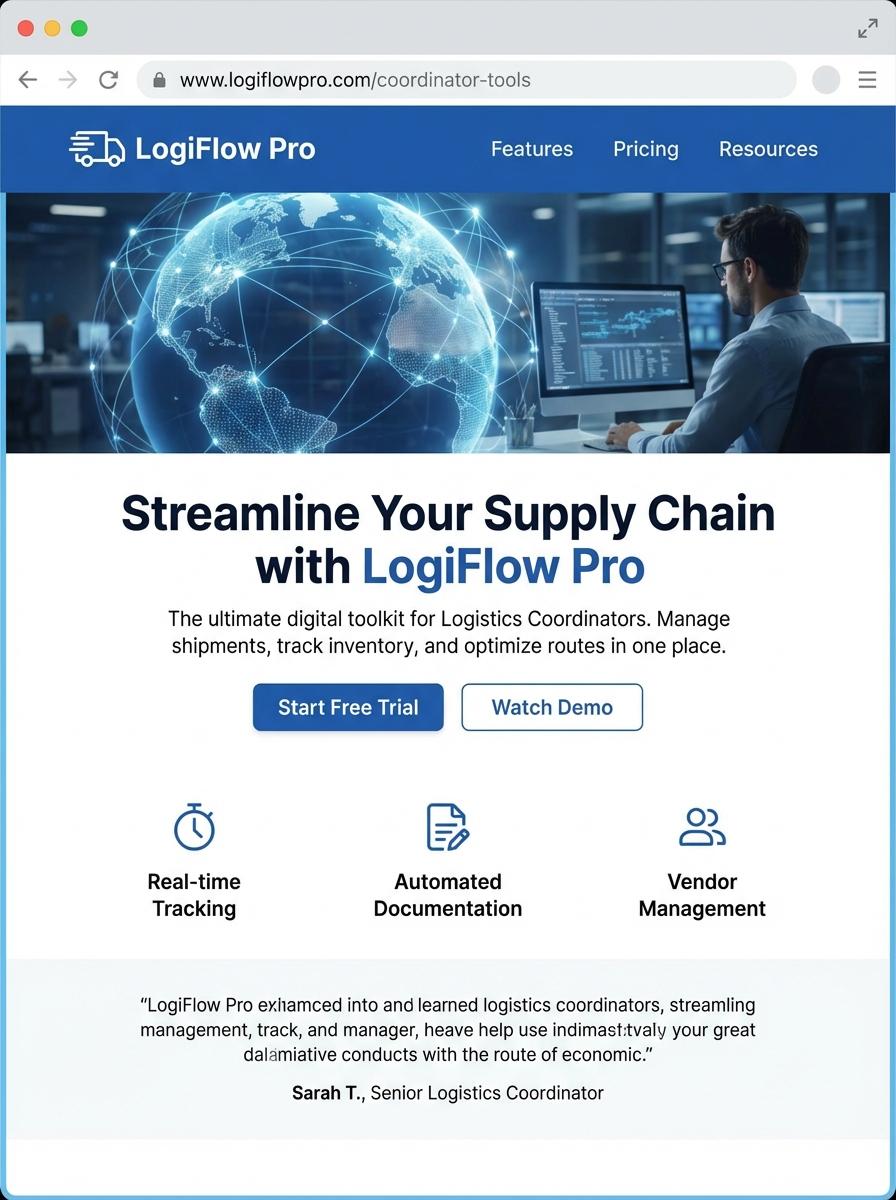
Illustration: Landing page for digital product for Logistics coordinator
Route Optimization Templates (Excel)
Route Optimization Templates in Excel are designed to enhance the efficiency of logistics coordinators by automating the planning of delivery routes. These templates incorporate algorithms to calculate the shortest path while considering multiple constraints such as time windows, vehicle capacity, and delivery priorities. Logistics efficiency is significantly improved through reduced fuel consumption and delivery times.
- Skill needed: Proficiency in Excel functions, VBA scripting, and basic knowledge of logistics operations.
- Product requirement: Integration of customizable fields for route parameters including stops, vehicle types, and delivery deadlines.
- Specification: Compatibility with Excel 2016 or later, user-friendly interface, and support for real-time data updates.
Freight Cost Analysis Report (PDF)
The Freight Cost Analysis Report provides Logistics Coordinators with detailed insights into shipping expenses, carrier performance, and route efficiency. This report consolidates data from various transportation modes and highlights cost-saving opportunities. Accurate freight cost tracking supports strategic decision-making and budget optimization.
- Skill needed: Proficiency in data analysis and transportation management systems.
- Product requirement: Integration with multiple shipping databases and real-time cost updates.
- Specification: Exportable PDF format with customizable filters for date range, carriers, and shipment types.
Shipment Tracking Dashboard (Excel)
Logistics coordinators require a Shipment Tracking Dashboard built in Excel to efficiently monitor shipment statuses, delivery timelines, and carrier performance. The dashboard should leverage data visualization tools like pivot tables and conditional formatting to present real-time updates and alerts. Integration with shipment databases and automated data refresh enhances accuracy and workflow efficiency.
- Skill needed: Proficiency in Excel functions, data visualization, and basic VBA for automation.
- Product requirement: Real-time data integration with shipment tracking systems and customizable status indicators.
- Specification: User-friendly interface with dynamic filtering, shipment heatmaps, and delivery performance KPIs.
Driver Safety Training Video
Creating a Driver Safety Training Video tailored for logistics coordinators requires understanding the specific challenges faced in transportation and shipment management. The content should emphasize safe driving practices, compliance with industry regulations, and risk mitigation strategies that directly impact logistics operations. Visual aids and real-life scenarios enhance learning and retention for coordinators responsible for fleet management.
- Skill needed: Expertise in logistics operations and knowledge of transportation safety standards.
- Product requirement: Clear, concise video modules with actionable safety guidelines and compliance checkpoints.
- Specification: High-quality visuals with real-world logistics scenarios and easy-to-understand instructional narration.
Delivery Schedule Planner (Excel)
The Delivery Schedule Planner in Excel is tailored for Logistics Coordinators to optimize route planning and improve shipment tracking. It integrates essential data such as delivery dates, vehicle capacity, and driver availability to streamline logistics operations. The planner enhances decision-making by providing real-time updates and visual scheduling tools.
- Skill needed: Proficiency in Excel functions, data manipulation, and basic VBA scripting for automation.
- Product requirement: Compatibility with multiple data import formats like CSV and integration with inventory management systems.
- Specification: User-friendly interface with customizable delivery time slots, alerts for delays, and printable schedule reports.
Standard Operating Procedures Manual (PDF/Doc)
The Standard Operating Procedures Manual for a Logistics Coordinator outlines essential workflows, protocols, and compliance requirements vital for efficient supply chain management. It standardizes processes such as shipment tracking, inventory control, and vendor communication to minimize operational errors. The manual serves as a reference to maintain consistency and ensure regulatory adherence in logistics operations.
- Skill needed: Detailed knowledge of logistics processes and operational risk management.
- Product requirement: Clear, step-by-step instructions with visual flowcharts in PDF or Doc format.
- Specification: Include compliance guidelines, contact lists, and escalation procedures tailored for logistics coordination.
Load Manifest Templates (Excel)
Load Manifest Templates in Excel are essential tools for logistics coordinators to organize and track shipment details efficiently. These templates streamline the recording of cargo information, carrier data, and delivery timelines, reducing errors and saving time. Properly designed templates enable seamless data integration with transportation management systems.
- Skill needed: Proficiency in Excel functions, including formulas, pivot tables, and data validation.
- Product requirement: Template must support easy input of shipment details such as load number, origin, destination, and weight.
- Specification: Include fields for carrier information, estimated delivery dates, and special handling instructions with clear formatting and error checking.
Streamline Fleet Management with Real-Time Tracking
Real-time tracking is essential for managing a fleet efficiently, providing instant updates on vehicle locations and statuses. This transparency helps in proactive decision-making and minimizing delays. Integrating GPS technology with your digital product ensures seamless monitoring and improved customer satisfaction. Always prioritize accuracy and reliability in your tracking system to gain a competitive edge.
Optimize Route Planning for Faster Deliveries
Optimized route planning reduces delivery times and operational costs by finding the most efficient paths. Use advanced algorithms and data analysis to navigate traffic patterns and road conditions. Effective route optimization enhances customer experience with prompt deliveries and boosts overall productivity. Make sure your digital product adapts dynamically to real-time changes on the road.
Boost Efficiency with Automated Scheduling Tools
Automated scheduling simplifies complex logistics by assigning tasks intelligently and minimizing human error. This allows businesses to allocate resources better, improve workforce management, and avoid scheduling conflicts. By integrating automation into your marketing strategy, you demonstrate how your digital product saves time and effort. Highlight ease of use and reliability to attract tech-savvy clients.
Reduce Costs through Data-Driven Insights
Data-driven insights empower businesses to identify cost-saving opportunities and optimize resources effectively. Analyzing performance metrics helps in understanding customer behavior and predicting future trends. Emphasize how your product leverages big data and analytics to reduce operational expenses. Clear visualization of key insights improves decision-making and ROI for users.
Enhance Visibility with Centralized Logistics Dashboard
A centralized logistics dashboard consolidates all critical information into one accessible platform, improving transparency and control. This holistic view allows users to monitor the entire supply chain effortlessly, identifying bottlenecks quickly. Promoting such a feature in your marketing highlights the power of integration and comprehensive management. Ensure your dashboard offers customizable views to cater to diverse business needs.