
Creating a digital product tailored for Frontend developers in the technology sector requires a deep understanding of their specific needs and workflow. This involves focusing on user-friendly interfaces, efficient coding tools, and seamless integration with popular frameworks. Prioritizing performance and responsiveness ensures the product enhances productivity and coding experience. Explore the article to discover detailed strategies for designing the ideal digital product for Frontend developers.
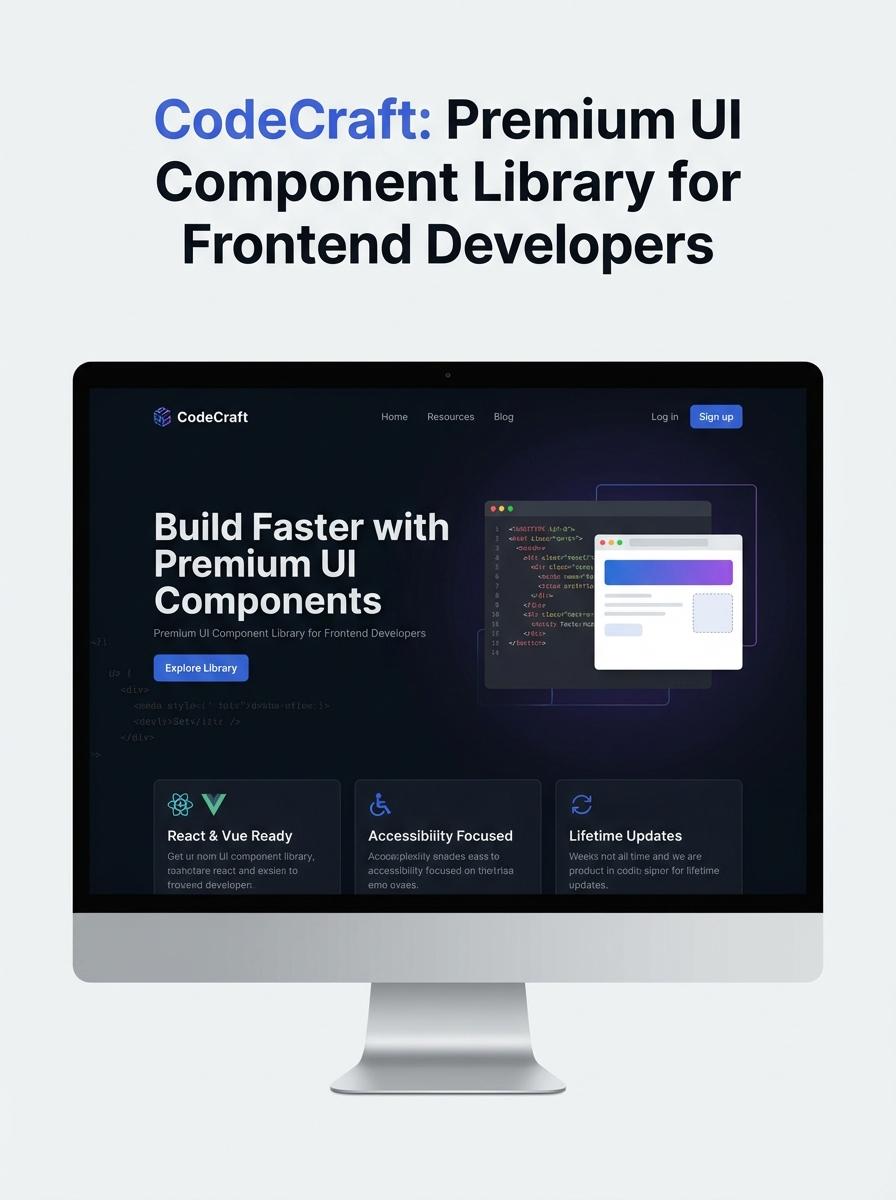
Illustration: Landing page for digital product for Frontend developer
UI Component Libraries (React/Vue component packs)
Creating a UI Component Library involves developing reusable React or Vue components that maintain consistent design and functionality across web applications. Components should be modular, well-documented, and optimized for performance to ensure seamless integration into different projects. Emphasis on accessibility and responsiveness enhances user experience while supporting diverse frontend development needs.
- Skill needed: Proficiency in React or Vue frameworks, understanding of component-driven architecture, and strong knowledge of CSS-in-JS or preprocessor usage.
- Product requirement: Components must support customization, theme adaptability, and comply with accessibility standards such as WCAG.
- Specification: Library should include detailed documentation, TypeScript support for type safety, and tools for testing component behavior and visual regression.
Website Templates (HTML/CSS/JS themes)
Creating Website Templates involves crafting reusable HTML, CSS, and JavaScript code structures tailored for various design needs. Frontend developers must ensure responsiveness, cross-browser compatibility, and maintain clean, semantic markup. Emphasis on modular CSS and optimized JavaScript enhances user experience and template scalability.
- Proficiency in semantic HTML5, CSS3 (including Flexbox/Grid), and modern JavaScript (ES6+).
- Templates must be fully responsive, lightweight, and compatible across major browsers and devices.
- Clear documentation and modular code architecture for ease of customization and maintenance.
Interactive Infographic Packs
Interactive Infographic Packs combine dynamic visualizations and user engagement to enhance data storytelling. Frontend developers must leverage HTML5, CSS3, and JavaScript frameworks like D3.js or React to create visually appealing and responsive interfaces. Accessibility and performance optimization are critical for delivering smooth interactions across devices.
- Proficiency in JavaScript libraries (D3.js, React, or Vue.js) for creating interactive graphics.
- Product must support responsiveness and adapt to multiple screen sizes and resolutions.
- Ensure compatibility with ARIA standards for accessibility and optimized loading times.
Frontend Testing Cheat Sheets (PDFs)
Frontend developers require comprehensive resources to streamline their testing workflows and minimize errors. Creating Frontend Testing Cheat Sheets in PDF format provides easy access to essential testing methodologies, frameworks, and best practices. These cheat sheets enhance productivity by summarizing key information such as unit tests, integration tests, and UI testing strategies.
- Skill needed: Proficient understanding of frontend testing frameworks like Jest, Cypress, and Selenium.
- Product requirement: Clear categorization of test types (unit, integration, E2E) with relevant code examples and commands.
- Specification: PDFs must be easily navigable, printable, and optimized for both digital and offline reference.
CSS Animation Collections (with code examples)
Mastering CSS Animation Collections enables frontend developers to enhance user interfaces with smooth, engaging visual effects. Utilizing keyframes, transitions, and timing functions, these animations breathe life into websites, improving user experience and retention. Including ready-to-use code examples allows developers to quickly implement and customize diverse animations for various UI elements.
- Skill needed: Proficiency in CSS keyframes, transitions, and animation properties.
- Product requirement: Comprehensive library of reusable CSS animation code snippets targeting common UI components.
- Specification: Well-documented, customizable animations with consistent browser compatibility and performance optimization.
Frontend Interview Question eBooks (PDF/Doc)
The Frontend Interview Question eBooks serve as a comprehensive resource tailored for frontend developers aiming to master key concepts in HTML, CSS, JavaScript, and modern frameworks. These eBooks compile carefully curated questions focusing on practical coding challenges, algorithms, and UI/UX principles relevant to real-world frontend development roles. Designed for various skill levels, the content supports continuous learning and effective interview preparation.
- Skill Needed: Proficiency in core frontend technologies including HTML5, CSS3, JavaScript (ES6+), and experience with frameworks like React or Vue.
- Product Requirement: The eBooks should be available in PDF and DOC formats with clear formatting suitable for diverse devices and easy printing.
- Specification: Include categorized questions by topic, difficulty level, and accompanied explanations or code solutions to enhance comprehension.
Short Video Tutorials on Modern Frameworks
Short video tutorials offer concise and targeted learning experiences on modern frontend frameworks such as React, Vue, and Angular. These tutorials focus on practical implementation, component-based architecture, and efficient state management techniques. They enable frontend developers to quickly grasp essential concepts and improve their coding skills.
- Skill needed: Proficiency in JavaScript, understanding of DOM manipulation, and familiarity with modern frontend frameworks.
- Product requirement: High-quality video resolution, clear audio narration, and segmented lessons for easy navigation.
- Specification: Support for subtitles, accessible on mobile and desktop devices, and downloadable code samples for hands-on practice.
Showcase Interactive UI Demos
Demonstrating your digital product with interactive UI demos enables potential users to experience its real-world usability firsthand. This approach effectively highlights features and ease of use, making the product more tangible and appealing. Interactive demos reduce user hesitation by offering practical insights into the product's performance. Including live examples can significantly increase engagement and conversion rates.
Emphasize Fast Integration
Marketing a digital product with fast integration capabilities appeals to developers looking for quick and seamless adoption. Highlight compatibility with popular frameworks and libraries to showcase flexibility and reduce implementation time. Clear messaging on integration speed can differentiate your product in a crowded market. Emphasizing this feature attracts a broader user base, including time-sensitive projects.
Promote Developer-Centric Documentation
Developer-centric documentation and comprehensive API references are essential for marketing digital products effectively. Clear, thorough, and accessible documentation lowers barriers for adoption while improving user satisfaction. It empowers developers to fully utilize product capabilities and encourages deeper engagement. Showcasing this strength can build trust and credibility among technical audiences.
Leverage Code Samples and Open-Source Contributions
Sharing code samples and emphasizing open-source contributions enhances your product's credibility within the developer community. Providing practical examples helps users quickly understand implementation and customization options. Open-source involvement demonstrates transparency, innovation, and community commitment. These elements together create a strong, trustworthy brand image for your digital product.
Engage Through Community Support and Product Updates
Active community support and regular product updates signal commitment to quality and ongoing improvement. Engaging users via forums, social media, and developer communities fosters loyalty and collective problem solving. Frequent updates ensure the product evolves with market needs, maintaining relevance and value. This continuous interaction boosts user retention and attracts new customers looking for dependable solutions.