
Creating a digital product tailored for merchandisers in the retail sector involves understanding their unique needs for inventory management, sales tracking, and trend analysis. Such a product should streamline operations, enhance decision-making, and support real-time data access to improve merchandising strategies. Integrating user-friendly interfaces and customizable features ensures it meets the dynamic demands of retail environments. Explore the article for detailed insights on designing an effective digital solution for retail merchandisers.
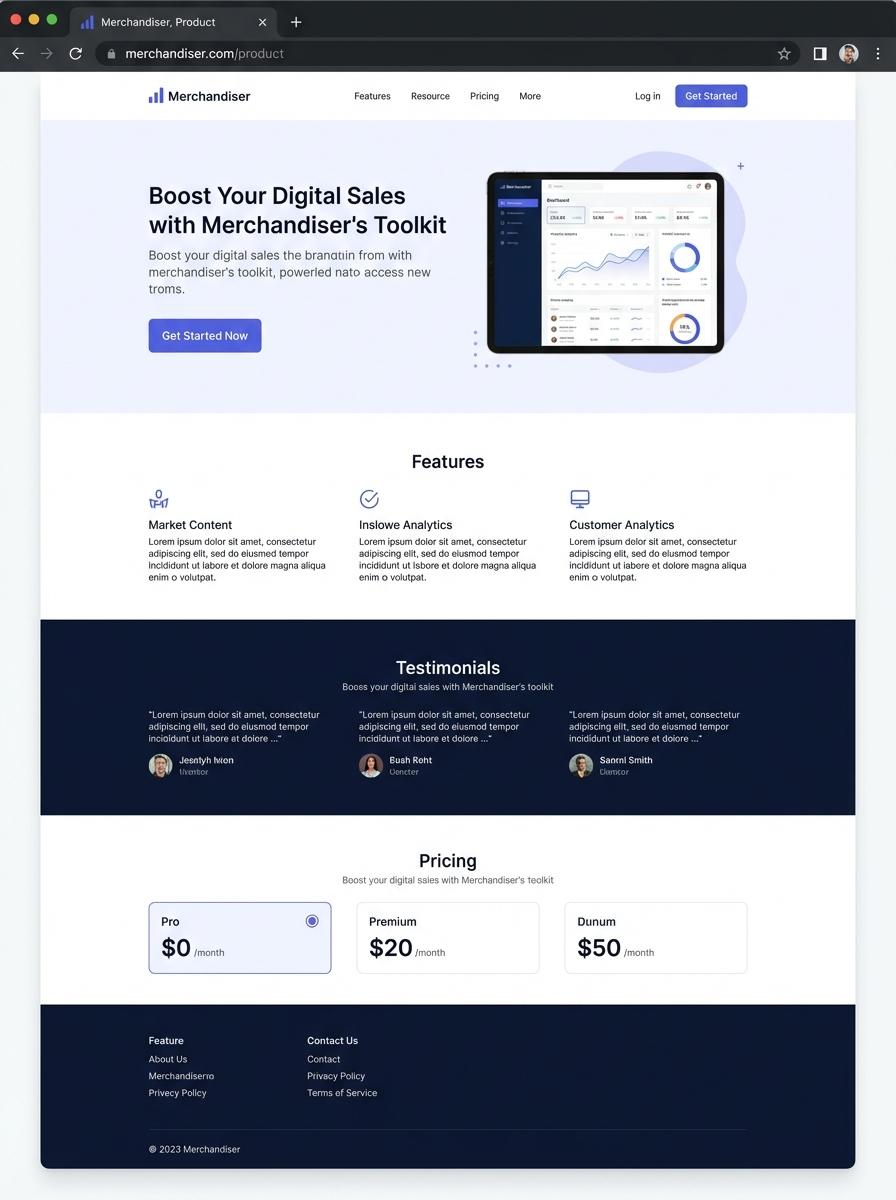
Illustration: Landing page for digital product for Merchandiser
Sales Performance Dashboard (Excel file)
Sales Performance Dashboard in Excel offers a comprehensive overview of a merchandiser's key metrics, including sales volume, product categories, and regional performance. This interactive dashboard enables quick identification of trends and underperforming products. Automated charts and pivot tables streamline data analysis to support better decision-making.
- Skill needed: Proficiency in Excel functions, pivot tables, and data visualization techniques.
- Product requirement: Dynamic filters by date, product category, and sales region for tailored insights.
- Specification: Include automated summary charts, KPI indicators, and exportable reports for easy sharing.
Seasonal Trend Analysis Report (PDF)
Merchandisers benefit greatly from a Seasonal Trend Analysis Report that highlights upcoming market shifts and consumer preferences. This PDF report compiles data on seasonal demand patterns, sales forecasts, and competitor activities to inform inventory and pricing strategies. It supports decision-making by offering actionable insights tailored to seasonal cycles.
- Skill needed: Data analysis expertise to interpret trends and sales data accurately.
- Product requirement: Clear visualization of seasonal sales patterns with charts and graphs.
- Specification: Include exportable PDF format with easy-to-navigate sections and executive summary.
Store Visual Merchandising Guidelines (PDF)
Store Visual Merchandising Guidelines provide a comprehensive framework to ensure consistent and effective product presentation across retail locations. These guidelines focus on optimizing shelf layout, lighting, and signage to enhance customer engagement and maximize sales. Merchandisers rely on these documents to maintain brand identity and streamline in-store execution.
- Skill needed: Proficiency in visual design principles and attention to detail to implement merchandising standards accurately.
- Product requirement: Clear, high-resolution graphics and step-by-step layout instructions suitable for diverse retail environments.
- Specification: Exportable PDF format compatible with mobile devices and easy to update for seasonal campaigns.
SKU Rationalization Tool (Excel)
SKU Rationalization is a critical process for merchandisers aimed at optimizing inventory by analyzing sales data, profitability, and product performance. Effective SKU rationalization reduces costs and enhances shelf space efficiency while maintaining customer satisfaction. Utilizing an Excel-based tool can streamline these analyses with custom formulas and data visualizations.
- Skills needed: proficiency in Excel functions, data analysis, and SKU inventory management.
- Product requirement: ability to import sales and inventory data, perform profitability calculations, and highlight underperforming SKUs.
- Specification: user-friendly dashboards with pivot tables, conditional formatting, and automated reporting features.
Product Training Video for Staff (Video file)
Creating a Product Training Video for merchandisers enhances understanding of merchandise features, sales techniques, and inventory management. The video file should clearly demonstrate product usage and key selling points to improve staff performance. Visual and auditory elements must align to ensure effective learning and retention.
- Skill needed: Expertise in content scripting, video production, and knowledge of merchandising principles.
- Product requirement: High-definition video format with clear audio and captions for accessibility.
- Specification: Duration of 10-15 minutes focusing on product details, merchandising strategies, and common customer FAQs.
Weekly Promotion Calendar Template (Excel)
The Weekly Promotion Calendar Template in Excel is designed to streamline the planning and tracking of merchandising promotions. This tool allows merchandisers to organize promotional activities by date, product category, and target audience, improving campaign efficiency. Structured data validation ensures accuracy in scheduling and resource allocation.
- Skill needed: Proficiency in Excel functions, data organization, and basic knowledge of merchandising cycles.
- Product requirement: User-friendly interface with customizable date ranges and automated formula-based alerts for deadline tracking.
- Specification: Includes sections for promotion details, budget allocation, inventory levels, and performance metrics.
Competitor Price Comparison Sheet (Excel)
The Competitor Price Comparison Sheet for Merchandisers provides a streamlined Excel template to track and analyze pricing trends across competing brands. It includes columns for product names, competitor prices, date of price check, and calculated price differences to identify market opportunities and optimize pricing strategies. Merchandisers can leverage this detailed data to make informed purchasing and pricing decisions quickly.
- Skill needed: Proficiency in Excel functions, data entry accuracy, and understanding of retail pricing strategies.
- Product requirement: The sheet must support real-time price updates, conditional formatting for price variations, and easy export options.
- Specification: Include columns for SKU, competitor names, retail prices, price comparison formulas, and a summary dashboard for insights.
Data-Driven Audience Segmentation for Personalized Targeting
Utilizing data-driven audience segmentation allows marketers to precisely identify and target specific customer groups. This approach enables personalized content and offers, boosting engagement and conversion rates. By analyzing demographic, behavioral, and psychographic data, businesses can tailor their messaging to meet individual needs effectively. Precision in targeting reduces marketing waste and maximizes ROI.
Seamless Omnichannel Shopping Experience
Creating a seamless omnichannel shopping experience ensures customers enjoy consistent and convenient interactions across all platforms. Integration of online and offline channels helps maintain brand continuity and enhances customer satisfaction. Providing multiple touchpoints, including social media, websites, and physical stores, meets consumers where they are. This strategic consistency fosters loyalty and encourages repeat purchases.
Real-Time Inventory and Trend Analytics Integration
Incorporating real-time inventory and trend analytics empowers marketers to respond swiftly to market demands and customer preferences. This integration helps avoid stockouts and overstock situations, optimizing inventory levels. Tracking emerging trends enables timely product adjustments and promotional strategies. It enhances decision-making and maintains competitiveness in dynamic markets.
Engaging Product Visuals and Interactive Content
High-quality product visuals combined with interactive content captivate users and increase engagement. Features like 360-degree views, videos, and augmented reality experiences help customers better understand the product. Interactive content transforms passive visitors into active participants, enhancing the likelihood of purchase. Visual storytelling builds emotional connections and strengthens brand appeal.
Conversion-Focused Mobile Optimization
Mobile optimization centered on conversion ensures that digital products are easily accessible and navigable on smartphones and tablets. Fast loading times, intuitive design, and simplified checkout processes reduce friction. Mobile-first strategies cater to the growing number of users shopping on mobile devices. Optimizing for mobile drives higher conversion rates and improves overall user experience.