
Creating a digital product suitable for Inventory specialists in the Retail sector requires understanding the unique challenges of managing stock levels, tracking product movement, and forecasting demand. The solution must offer real-time inventory updates, seamless integration with existing retail systems, and user-friendly interfaces tailored to inventory professionals. Advanced analytics and automation features can significantly enhance accuracy and efficiency, reducing errors and downtime. Explore the detailed ideas in the article to learn how to design an effective digital product that meets the specific needs of retail inventory specialists.
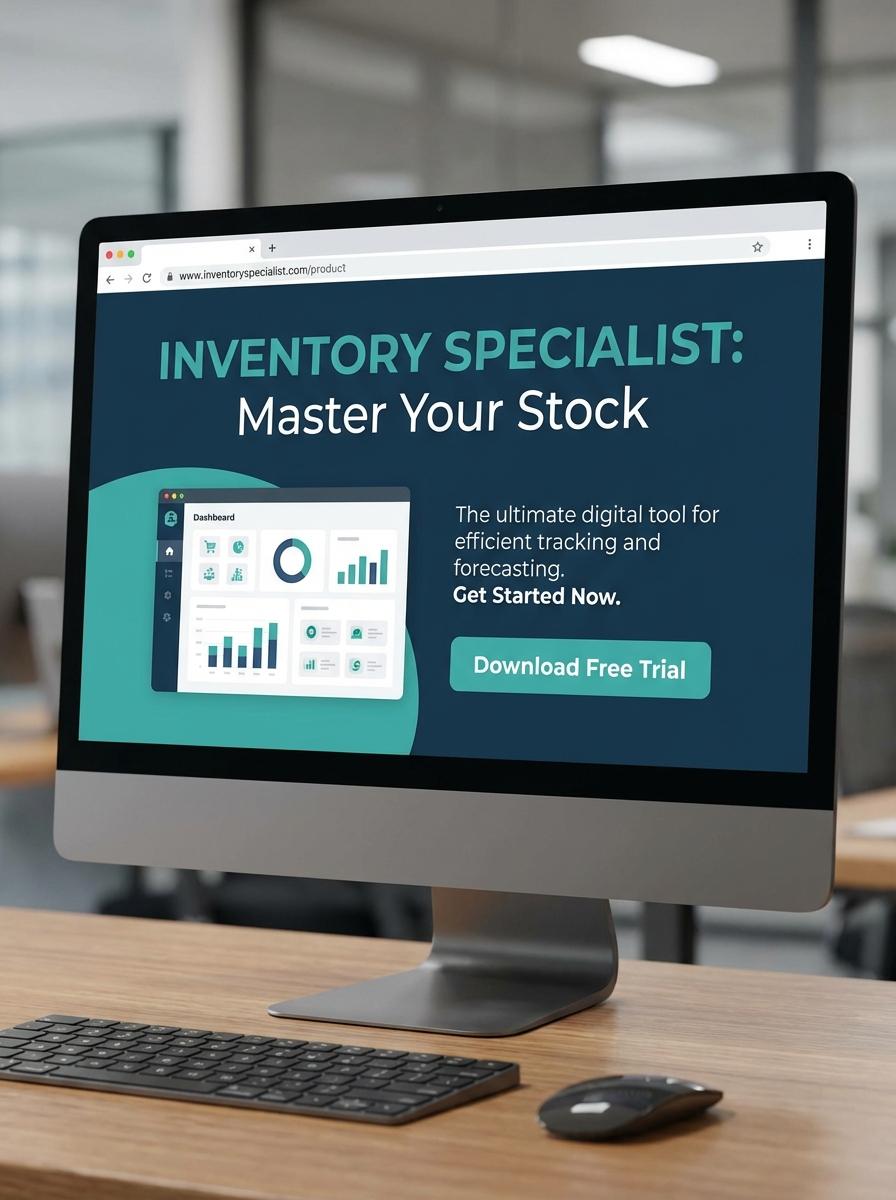
Illustration: Landing page for digital product for Inventory specialist
Inventory Audit Checklist (PDF)
An Inventory Audit Checklist (PDF) streamlines the process of verifying stock levels, condition, and accuracy for inventory specialists. It includes detailed items such as item descriptions, quantities, and condition status to ensure comprehensive audits. This tool enhances inventory control by promoting consistency and reducing errors in stock management.
- Skill needed: Attention to detail and proficiency in inventory management systems.
- Product requirement: Clear, organized format with checkboxes and space for notes in PDF form.
- Specification: Compatible with mobile devices for on-the-go usage and printable for physical audits.
Stock Replenishment Schedule Template (Excel)
The Stock Replenishment Schedule Template in Excel helps inventory specialists track supply levels and predict reorder points, optimizing inventory turnover and minimizing stockouts. This tool integrates data on sales velocity, lead times, and current stock quantities to provide timely alerts for restocking. Automating these calculations supports efficient resource allocation and reduces carrying costs.
- Skill needed: Proficiency in Excel formulas, data analysis, and inventory management principles.
- Product requirement: Dynamic input fields for stock levels, reorder points, and lead times.
- Specification: Automated alerts and customizable forecasting to align with variable demand patterns.
Retail Inventory Turnover Calculator (Excel)
An Inventory Turnover Calculator designed in Excel helps inventory specialists analyze how efficiently stock is sold and replenished. Calculating turnover rate involves dividing cost of goods sold by average inventory during a specific period, enabling optimization of purchasing decisions. This tool supports improved inventory management through accurate and timely data insights.
- Skills needed: Proficiency in Excel formulas, data analysis, and basic accounting principles.
- Product requirement: User-friendly interface for inputting cost of goods sold and inventory levels with automatic turnover calculation.
- Specification: Include customizable timeframes and visual charts to track changes in turnover rates over time.
Barcode Labeling Guide (PDF)
Barcode labeling is a crucial component for inventory specialists to efficiently track and manage stock levels. A well-designed Barcode Labeling Guide (PDF) provides standardized protocols for label creation, including size, font, and placement to ensure scannability and durability. Proper implementation reduces errors and streamlines warehouse operations, improving overall inventory accuracy.
- Skill needed: Understanding of barcode types, scanning technology, and inventory management systems.
- Product requirement: High-resolution PDF format with clear instructions, sample templates, and printable label layouts.
- Specification: Labels must comply with industry standards such as GS1, be resistant to environmental factors, and compatible with common barcode scanners.
Inventory Tracking Log Sheet (Excel)
Inventory Tracking Log Sheet in Excel is essential for inventory specialists to efficiently monitor stock levels, track item movements, and reduce discrepancies. It enables real-time data entry, automated calculations, and generates detailed reports to optimize inventory management. Excel's customizable features allow tailored solutions for various inventory types and business needs.
- Skill needed: Proficiency in Excel functions such as formulas, pivot tables, and data validation for accurate inventory tracking.
- Product requirement: Ability to input and update item quantities, record transactions, and maintain historical inventory logs in a clear format.
- Specification: Integration of automatic alerts for low stock levels and customizable fields to accommodate different inventory categories.
Video Tutorial: Inventory Management Best Practices (Video)
Inventory specialists benefit greatly from mastering inventory management best practices, which improve stock accuracy and reduce holding costs. Proper techniques include demand forecasting, regular cycle counts, and efficient reorder points. These video tutorials provide targeted strategies to optimize inventory flow and minimize stockouts.
- Skill needed: Proficiency in inventory tracking systems and data analysis for accurate stock management.
- Product requirement: High-quality video with clear visuals and step-by-step instructions on best inventory practices.
- Specification: Include case studies and real-world examples tailored to inventory specialist challenges.
Product Categorization Template (Excel)
Inventory specialists require a Product Categorization Template in Excel to efficiently organize and manage stock data. This template facilitates the classification of products by attributes such as type, SKU, price, and supplier, improving inventory tracking accuracy. Utilizing this structured approach helps optimize stock levels and streamline replenishment processes.
- Strong proficiency in Excel functions like VLOOKUP, pivot tables, and data validation.
- Template must include sortable columns for product categories, SKUs, quantities, and pricing details.
- Design should support easy updates and integration with inventory management software.
Streamline Inventory Processes Efficiently
To achieve success in marketing a digital product, it's essential to streamline inventory processes. Efficient management of digital assets ensures faster delivery and reduces overhead costs. Automation tools can help eliminate manual errors and save valuable time. Simplified workflows boost overall productivity and enhance customer satisfaction.
Real-Time Stock Tracking Solutions
Implementing real-time stock tracking allows marketers to maintain accurate availability data. This capability prevents overselling and enhances customer trust by providing up-to-date information. Instant synchronization across platforms keeps all stakeholders informed at all times. Real-time tracking is a critical component for optimizing sales strategies and inventory replenishment.
User-Friendly Interface for Quick Adoption
A user-friendly interface is crucial for quick adoption of marketing tools and platforms. Intuitive design minimizes the learning curve and accelerates efficiency for marketing teams. When users can navigate software effortlessly, they focus more on creative tasks rather than troubleshooting. Prioritizing usability helps maximize the value of digital marketing solutions.
Seamless Integration with Existing Systems
Successful marketing relies on seamless integration with existing business systems such as CRMs and payment gateways. This compatibility ensures smooth data flow and consistent customer experiences. Avoiding siloed information boosts collaboration and decision-making speed. Integration reduces operational redundancies and enhances overall campaign effectiveness.
Advanced Analytics for Data-Driven Decisions
Advanced analytics empower marketers to make informed, data-driven decisions that optimize campaign performance. By analyzing customer behavior and sales trends, you can tailor strategies to target audiences more accurately. Real-time analytics provide actionable insights, reducing guesswork in marketing efforts. Leveraging data analytics is fundamental for achieving sustained success in digital product marketing.