
Creating a digital product suitable for television producers in the media sector involves understanding the unique workflows and content demands of TV production. The product must integrate seamlessly with existing broadcast technologies, support collaborative editing, and enable efficient content management and distribution. Prioritizing user-friendly interfaces and robust analytics can significantly enhance production quality and decision-making. Explore the article for detailed ideas on developing digital solutions tailored to television producers' needs.
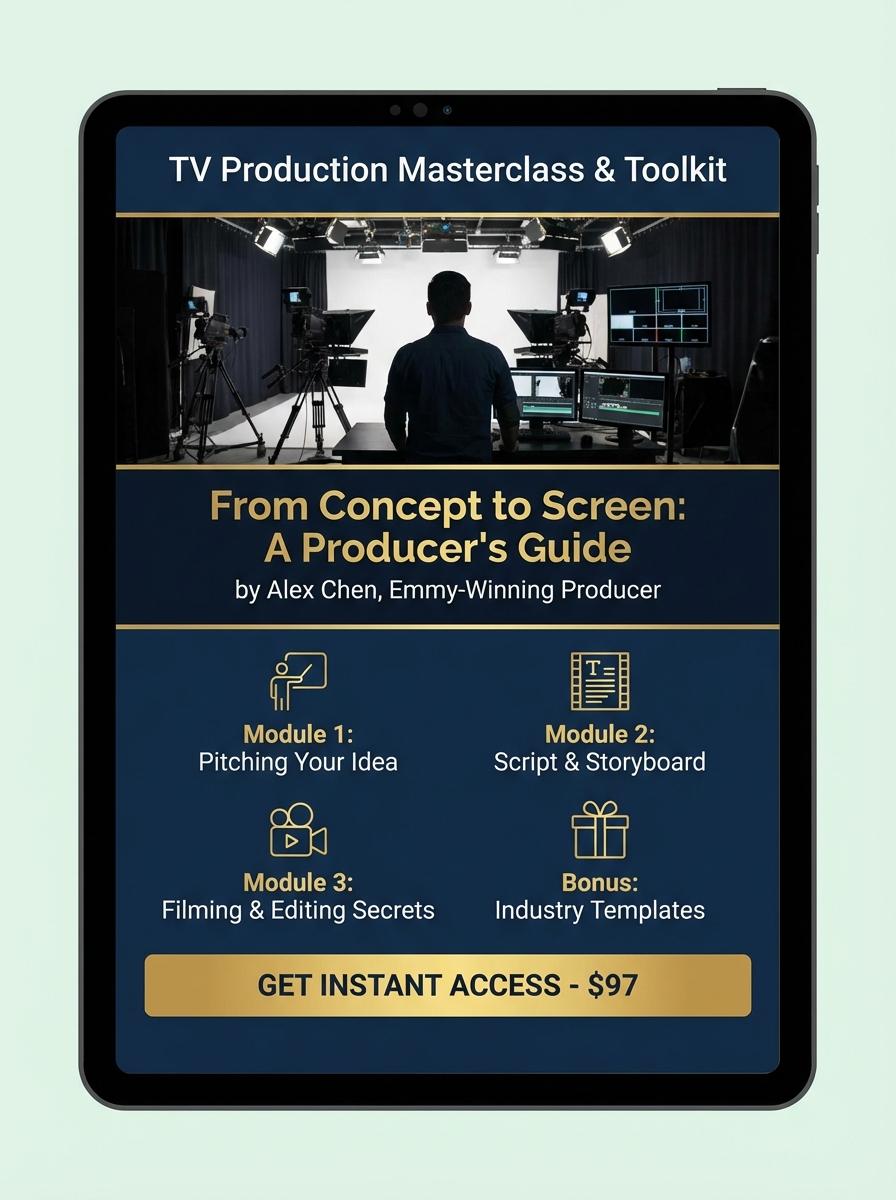
Illustration: Landing page for digital product for television producer
Scriptwriting templates (doc, pdf)
Creating scriptwriting templates tailored for television producers involves understanding industry formatting standards and scene structuring. These templates must support various script elements such as dialogue, action, and transitions, ensuring clarity and ease of use. Offering the templates in both DOC and PDF formats guarantees compatibility across different devices and software.
- Proficiency in television script formatting and narrative flow.
- Templates should include editable DOC files and non-editable PDF versions.
- Support for scene headings, character cues, and timed dialogue markers.
Storyboard templates (pdf, doc)
Storyboard templates designed for television producers streamline the pre-production phase by providing organized visual outlines of scenes and sequences. These templates, available in PDF and DOC formats, cater to the specific needs of TV production with customizable panels and annotations. They facilitate clear communication among creative teams and help maintain project timelines efficiently.
- Skill needed: Proficiency in visual storytelling and scene composition tailored for TV production.
- Product requirement: Templates must support easy editing and export in both PDF and DOC formats.
- Specification: Include standardized panels for shots, dialogue, timing, and production notes relevant to television workflows.
Pitch decks for TV show concepts (ppt, pdf)
Creating a pitch deck for TV show concepts involves distilling the essence of the show into clear, engaging visuals and concise text. It must effectively communicate the show's genre, target audience, and unique selling points within limited slides. The deck's design should facilitate quick comprehension and evoke excitement among television producers.
- Skills needed: storytelling, graphic design, market research, and audience analysis.
- Product requirements: compatibility with PowerPoint and PDF formats, slide templates for genre-specific elements, and easy customization tools.
- Specifications: concise slide count (10-15 slides), high-quality visuals, clear structure including logline, synopsis, character breakdown, and production details.
Production budget spreadsheets (excel)
Creating a production budget spreadsheet tailored for television producers involves accurately mapping out expenses such as pre-production, shooting, post-production, and contingency costs. The spreadsheet should prioritize clear categorization by departments like talent, crew, equipment, locations, and licensing fees. Incorporating formulas to track actual versus projected expenses can improve financial oversight and decision-making throughout the production lifecycle.
- Skill needed: Proficiency in Excel functions, budgeting principles, and understanding of television production workflows.
- Product requirement: Must include customizable budget categories relevant to TV production phases and departments.
- Product specification: Built-in formulas for real-time cost tracking, conditional formatting for overspending alerts, and export options for reporting.
Post-production workflow checklists (pdf, doc)
Creating a post-production workflow checklist for television producers enhances project organization by outlining essential tasks such as editing, color correction, and sound mixing. This checklist ensures deadlines are met and quality standards adhered to during the final stages of production. Structured documents like PDF or DOC formats enable easy distribution and real-time updates.
- Skill needed: Familiarity with post-production stages including editing software and audio-visual synchronization.
- Product requirement: Must be available in editable DOC and universally accessible PDF formats for flexibility.
- Specification: Checklist should include time allocation, quality checkpoints, and contact details of all involved team members.
Sample release forms for talent/locations (pdf, doc)
Television producers require sample release forms tailored for talent and location agreements to secure legal permissions for usage rights. These forms must clearly specify consent for distribution, including broadcast, streaming, and syndication. Formats such as PDF and DOC ensure easy customization and professional presentation during the production process.
- Skill needed: Understanding of legal language related to talent rights and location permissions.
- Product requirement: Forms must be editable in DOC format and secure as PDFs for signature collection.
- Specification: Include clauses addressing usage duration, territorial rights, and image/audio capture consents.
Video tutorials on editing or production techniques (video)
Creating video tutorials focused on editing and production techniques can significantly enhance the skills of television producers. These tutorials should cover advanced software tools, storytelling methods, and technical workflows critical for TV content creation. Clear, concise instructions paired with real-world examples provide practical value to professionals in the industry.
- Skill needed: Proficiency in video editing software like Adobe Premiere Pro, Final Cut Pro, or Avid Media Composer.
- Product requirement: High-quality screen capture with voiceover narration explaining step-by-step processes.
- Specification: Tutorials must include techniques specific to television production such as multi-camera editing and broadcast standards compliance.
Target Audience Segmentation for Tailored Content Delivery
Segmenting your target audience allows marketers to create personalized content that resonates with specific groups. By analyzing demographics, behaviors, and preferences, you can deliver relevant messages that increase engagement and conversion rates. Tailored content builds stronger connections and enhances user experience, driving loyalty. This focused approach maximizes marketing efficiency and ROI.
Multichannel Digital Platform Integration
Integrating multiple digital platforms ensures a consistent brand presence across various channels such as social media, email, and websites. A unified strategy helps reach a broader audience while maintaining seamless communication. Multichannel integration improves customer journey tracking and enables real-time adjustments. This approach increases visibility and strengthens brand recognition.
Data-Driven Content Strategy Optimization
Utilizing data analytics helps refine content strategies by identifying what works and what doesn't. Metrics like engagement rates, click-throughs, and conversions guide decision-making and content adjustments. Data-driven insights optimize resource allocation and enhance message effectiveness. Continuous evaluation fosters adaptability in dynamic digital markets.
Effective Influencer and Partnership Collaborations
Collaborating with influencers and partners extends your reach and adds credibility to your digital product. Choosing the right influencers aligned with your brand values ensures authentic promotion and trust. Partnerships enable cross-promotion and access to new audiences. These collaborations amplify marketing impact and generate valuable word-of-mouth.
Compelling Storytelling with Strong Brand Positioning
Crafting compelling stories connects your digital product to customers emotionally and differentiates it in a crowded market. Strong brand positioning defines your unique value and builds memorable experiences. Storytelling fosters brand loyalty and drives engagement by making the product relatable. This strategy creates a lasting impression that motivates purchasing decisions.