
Creating a digital product suitable for Occupational Therapists in the healthcare sector requires an in-depth understanding of their unique workflow and patient needs. Such a product should streamline assessment, treatment planning, and progress tracking while ensuring compliance with healthcare regulations. Incorporating user-friendly design and interoperability with existing healthcare systems enhances its effectiveness. Explore the article for detailed ideas on developing an impactful digital solution tailored to Occupational Therapists.
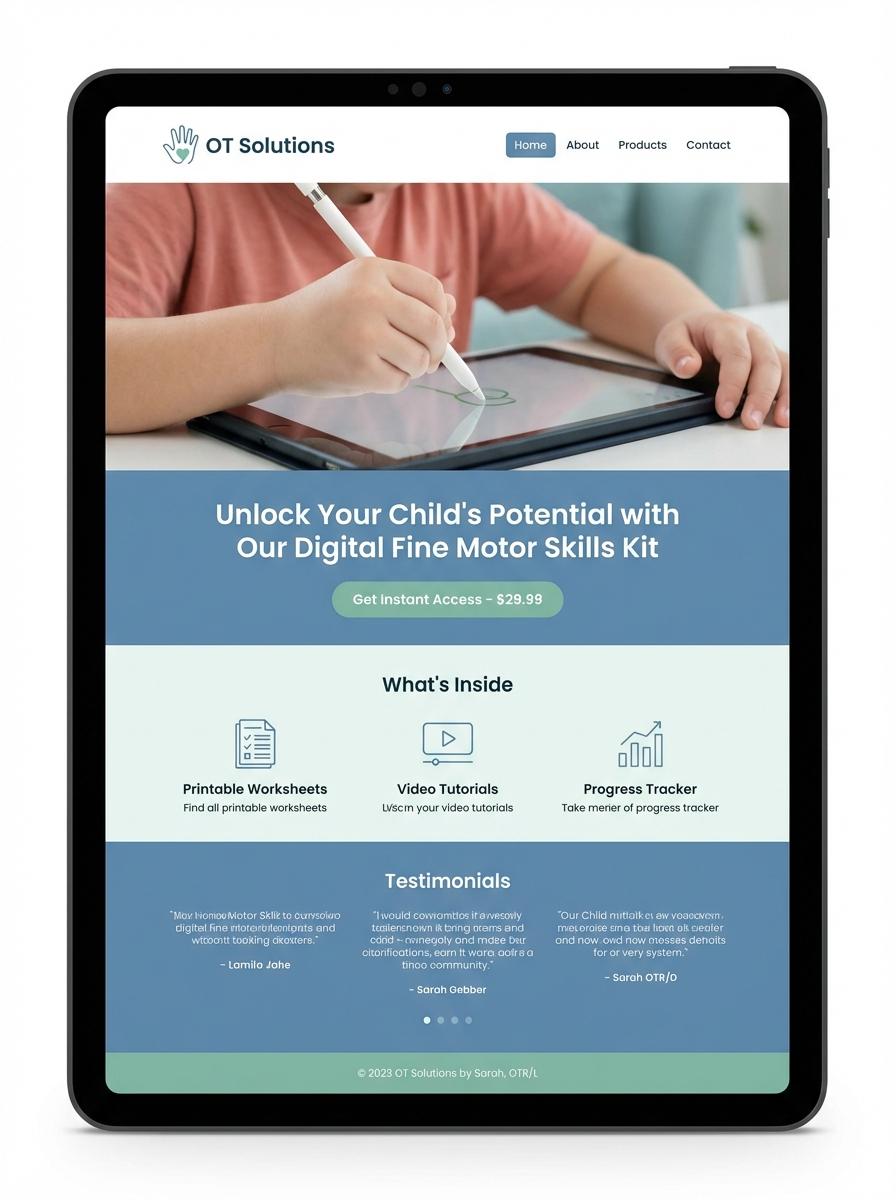
Illustration: Landing page for digital product for Occupational therapist
Home Exercise Program Printable Guide (PDF)
The Home Exercise Program Printable Guide (PDF) is designed to assist occupational therapists in delivering personalized, accessible rehabilitation exercises. It facilitates client adherence to therapy regimens by providing clear, structured instructions and visual aids. This resource supports efficient home-based recovery and progress tracking.
- Skill needed: Knowledge of occupational therapy best practices and ability to create user-friendly visual content.
- Product requirement: Customizable PDF format allowing therapists to tailor exercises to individual patient needs.
- Specification: Clear, concise instructions with illustrative images and space for therapist notes and progress documentation.
Daily Sensory Diet Tracker (Excel)
The Daily Sensory Diet Tracker in Excel is designed specifically for occupational therapists to systematically record and analyze sensory activities tailored to clients' needs. This tool enhances tracking of sensory input types, durations, and client responses, facilitating data-driven adjustments to therapy plans. Its structured format supports clear visualization of daily sensory patterns, improving intervention outcomes.
- Skill needed: proficiency in Excel, including formulas, conditional formatting, and data visualization tools like charts.
- Product requirement: customizable input fields to document various sensory activities (e.g., vestibular, tactile) and client reactions.
- Specification: automatic summary tables and graphical reports for weekly and monthly sensory input analysis to aid treatment adjustments.
Patient Goal Setting Worksheet (DOC)
Patient Goal Setting Worksheet (DOC) is a tailored digital tool designed to assist occupational therapists in efficiently documenting and tracking patient objectives. It facilitates personalized goal formulation aligned with therapy plans and progress monitoring. This worksheet enhances patient engagement by providing a clear, structured format for goal setting.
- Skill needed: Knowledge of occupational therapy goals and patient-centered care techniques.
- Product requirement: Editable DOC format compatible with common word processing software.
- Specification: Include sections for patient information, short-term and long-term goals, and therapist notes.
Ergonomic Workstation Setup Checklist (PDF)
Occupational therapists benefit from a comprehensive Ergonomic Workstation Setup Checklist designed to promote musculoskeletal health and optimize work efficiency. This PDF guide incorporates evidence-based ergonomic principles tailored to therapeutic environments, ensuring clients maintain proper posture and minimize strain. Detailed assessments of monitor height, chair support, and keyboard placement are crucial components to reduce injury risk and enhance comfort.
- Skills needed: Knowledge of ergonomic assessment methods, understanding of musculoskeletal conditions, proficiency in creating clear instructional content.
- Product requirements: PDF format compatibility, printable layout, inclusion of visual diagrams and checkboxes for easy client use.
- Specifications: Criteria for adjustable workstation components, guidelines for individualized adaptations, evidence-based ergonomic recommendations for therapeutic practices.
Fine Motor Skill Activity Video Series (Video)
The Fine Motor Skill Activity Video Series is designed specifically for occupational therapists to assist in developing patients' hand coordination and dexterity. Each video provides targeted exercises and step-by-step demonstrations to enhance fine motor control. The series supports therapeutic goals through engaging and practical activities suitable for various age groups and ability levels.
- Skill Needed: Knowledge of occupational therapy techniques and fine motor skill development.
- Product Requirement: High-quality video resolution with clear audio instructions for ease of patient following.
- Specification: Videos categorized by age group and difficulty level, aligned with therapeutic milestones.
Adaptive Equipment Recommendation Templates (DOC)
Occupational therapists utilize Adaptive Equipment Recommendation Templates in DOC format to streamline the process of documenting patient needs and treatment plans. These templates enhance accuracy and consistency in recording tailored equipment suggestions based on individual assessments. The standardized format supports efficient communication between therapists, patients, and caregivers.
- Skill needed: Proficiency in occupational therapy assessment and documentation.
- Product requirement: Editable DOC templates compatible with common word processors.
- Specification: Sections for patient info, assessment results, equipment types, and usage instructions.
Cognitive Rehabilitation Activity Workbook (PDF)
The Cognitive Rehabilitation Activity Workbook (PDF) is designed specifically to support occupational therapists in delivering targeted cognitive rehabilitation interventions. This workbook includes structured exercises aimed at improving memory, attention, problem-solving, and executive functions in patients with neurological impairments. The digital format allows for easy customization and repeat use in clinical or home settings.
- Skill needed: Understanding of cognitive rehabilitation techniques and occupational therapy assessment methods.
- Product requirement: Interactive activities that address multiple cognitive domains, adaptable for different patient levels.
- Specification: PDF format optimized for both digital use and print, including clear instructions, progress tracking, and printable worksheets.
Evidence-Based Solutions Tailored for Occupational Therapists
Achieving success in marketing a digital product begins with creating evidence-based solutions that specifically address the needs of occupational therapists. Tailoring your product to this niche ensures higher relevance and trust among potential users. Highlight clinical research and proven outcomes to strengthen your product's credibility. Emphasize the integration of best practices to attract a professional audience.
Streamline Client Management with User-Friendly Digital Tools
Enhance marketing success by showcasing your product's ability to streamline client management with intuitive, user-friendly digital tools. Occupational therapists seek products that simplify scheduling, documentation, and communication. Clear demonstrations of ease-of-use and efficiency will resonate well with busy practitioners. Prioritize a seamless user experience to maximize adoption rates.
HIPAA-Compliant Technology for Secure Patient Data Handling
Security is paramount in healthcare, so emphasize your product's HIPAA-compliant technology to ensure secure patient data handling. Compliance not only protects users but also boosts product credibility in the health market. Use marketing messaging focused on data privacy and trustworthiness. Demonstrating regulatory adherence can differentiate your product from competitors.
Boost Therapy Outcomes with Customizable Digital Resources
Marketing success hinges on promoting how your digital product can boost therapy outcomes through customizable resources tailored to individual client needs. Therapists are attracted to flexible tools that can adapt to various treatment plans. Showcase success stories or case studies where customization led to improved results. This personalized approach fosters user confidence and product value.
Ongoing Expert Support and Continuous Product Updates
Highlighting ongoing expert support and continuous product updates in your marketing strategy reassures potential customers of long-term value. Occupational therapists appreciate reliable assistance and innovations that keep tools current. Providing responsive support and regular enhancements can build strong user loyalty. Position these features as essential benefits to encourage purchase decisions.