
Creating a digital product suitable for aquaculturists involves understanding the unique challenges faced in the agriculture sector, especially in fish farming and aquatic environments. The product should streamline farm management, monitor water quality, and optimize feed schedules to enhance productivity and sustainability. Integrating real-time data analytics and user-friendly interfaces can empower aquaculturists to make informed decisions. Explore detailed ideas and strategies in the article to develop an effective digital solution tailored to aquaculture needs.
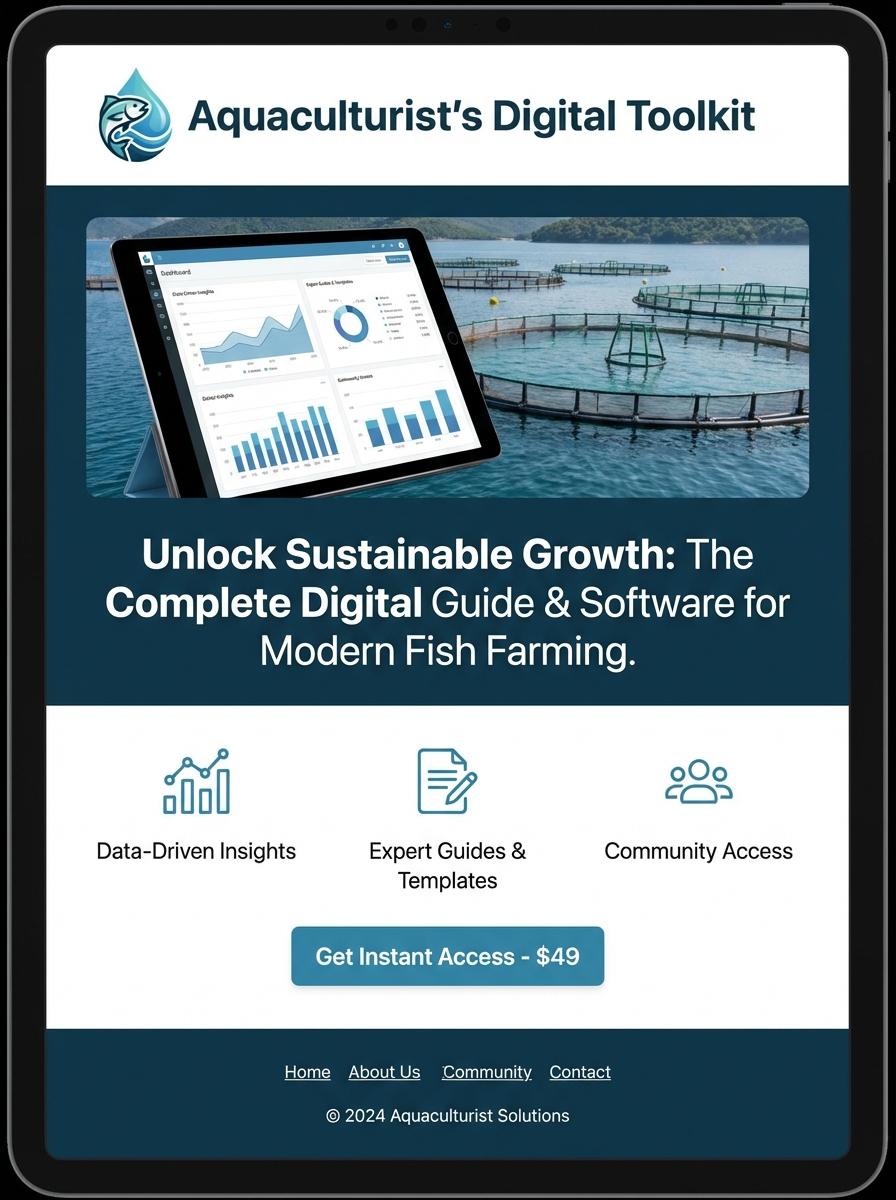
Illustration: Landing page for digital product for Aquaculturist
Aquaculture Farm Business Plan Template (Excel/Word)
The Aquaculture Farm Business Plan Template provides aquaculturists with a structured framework to outline operational strategies, financial projections, and market analysis. It supports efficient resource management and risk assessment tailored to aquaculture ventures. The template integrates customizable Excel spreadsheets and Word documents for seamless data input and reporting.
- Skill needed: Knowledge of aquaculture practices and financial planning.
- Product requirement: Editable Excel sheets for budgeting and forecasting.
- Specification: Word document sections covering objectives, marketing strategy, and compliance.
Fish Disease Identification Guide (PDF)
Fish Disease Identification Guide in PDF format serves as an essential tool for aquaculturists to accurately diagnose common and emerging fish diseases. It provides detailed symptoms, causes, and treatment options tailored to various fish species in aquaculture environments. The guide emphasizes practical, science-based methods to improve fish health management and reduce economic losses.
- Skill Needed: Knowledge of fish pathology and aquatic ecosystems to interpret and apply disease diagnosis correctly.
- Product Requirement: Clear, high-resolution images and easy-to-read symptom checklists for quick reference in the field.
- Specification: Compatibility with mobile devices to support on-site identification and decision-making for aquaculturists.
Water Quality Monitoring Spreadsheet (Excel)
The Water Quality Monitoring Spreadsheet in Excel enables aquaculturists to track critical parameters such as pH, temperature, dissolved oxygen, and ammonia levels, essential for maintaining optimal aquatic environments. Consistent data logging supports early detection of water quality issues, safeguarding fish health and growth. The spreadsheet is designed to facilitate trend analysis and informed decision-making through automated charts and conditional formatting features.
- Skill needed: Proficiency in Excel functions, data entry, and basic water quality concepts specific to aquaculture.
- Product requirement: Must support input of multiple water quality parameters with time-stamped records and easy data export.
- Specification: Includes automated alerts for parameter thresholds, graphical dashboards, and customizable reporting templates.
Step-by-Step Fish Breeding Tutorial Video
The Step-by-Step Fish Breeding Tutorial Video provides aquaculturists with detailed guidance on breeding techniques, hatchery management, and water quality control. These videos emphasize best practices for sustainable aquaculture and species-specific breeding protocols. Targeted visual instruction supports the effective application of breeding cycles and improves yield outcomes.
- Skill needed: Proficiency in aquatic biology and fish husbandry practices.
- Product requirement: High-definition video quality with clear stepwise demonstrations.
- Specification: Inclusion of subtitles and species-specific breeding timelines for enhanced learning.
Feed Formulation Calculator (Excel)
The Feed Formulation Calculator in Excel allows aquaculturists to optimize feed ingredients based on nutritional requirements and cost efficiency. This tool calculates the precise amounts of protein, lipid, carbohydrate, vitamins, and minerals needed for different aquatic species. It integrates species-specific growth data to improve feed conversion ratios and reduce wastage.
- Skill needed: Proficiency in Excel formulas, macros, and basic aquaculture nutrition principles.
- Product requirement: User-friendly interface with customizable input fields for various feed ingredients and nutrient parameters.
- Specification: Ability to generate cost-effective balanced feed rations tailored to target species and growth stages.
Beginner’s Guide to Sustainable Aquaculture (PDF)
Creating a Beginner's Guide to Sustainable Aquaculture PDF requires focusing on environmentally responsible farming techniques to support aquatic life health and ecosystem balance. Key topics include water quality management, species selection, and waste reduction strategies. Emphasizing practical methods and scientific research ensures aquaculturists can implement sustainable practices effectively.
- Skill Needed: Understanding of aquaculture principles, environmental science, and technical writing for clear knowledge transfer.
- Product Requirement: Interactive PDF format with easy navigation, high-quality images, and detailed charts illustrating sustainable methods.
- Specification: Content tailored specifically to aquaculturists, featuring actionable guidelines, case studies, and regulatory compliance information.
Aquaculture Record Keeping Templates (Excel)
Effective Aquaculture Record Keeping Templates in Excel streamline data management for aquaculturists by tracking water quality, feed schedules, and growth rates. These templates enhance decision-making through accurate, real-time data entry. Consistent record maintenance supports regulatory compliance and operational efficiency.
- Skill needed: Proficiency in Excel functions including data validation, pivot tables, and conditional formatting.
- Product requirement: Templates must include customizable sheets for water quality parameters, feeding logs, and stock inventories.
- Specification: Excel templates should be compatible with both Windows and MacOS versions and optimized for easy data export.
Boost Fish Farm Yields with Smart Digital Solutions
Implementing smart digital solutions significantly enhances fish farm productivity by optimizing resource use and improving growth conditions. These technologies provide actionable insights that lead to better decision-making. Leveraging automation and data-driven strategies helps fish farmers achieve higher yields efficiently. Embracing innovation is key to staying competitive in the aquaculture industry.
Real-Time Water Quality Monitoring for Aquaculture
Real-time water quality monitoring is essential for maintaining optimal conditions in fish farms. Sensors track critical parameters like oxygen levels, pH, and temperature continuously. Early detection of water issues prevents fish stress and disease outbreaks, ensuring a healthier stock. This technology enables proactive management, reducing losses and boosting productivity.
Automated Feeding and Stock Management Tools
Automated feeding systems and stock management tools streamline operations by reducing manual labor and minimizing human error. These tools adjust feeding schedules based on fish behavior and biomass data, promoting sustainable growth. Efficient feed use lowers costs and decreases environmental impact. Additionally, real-time stock tracking helps maintain optimal population density and health.
Maximize Profit with Aquaculture Data Analytics
Utilizing data analytics in aquaculture uncovers trends and patterns that drive smarter business strategies. Analytics tools analyze production, feed usage, and environmental data to increase operational efficiency. This insight helps fish farmers make informed decisions that maximize profit margins. Data-driven approaches also support risk management and strategic planning.
Easy-to-Use Digital Platforms for Fish Farmers
Intuitive digital platforms empower fish farmers by simplifying complex farm management tasks. User-friendly interfaces facilitate monitoring, reporting, and control of aquaculture processes from any device. These platforms promote faster adoption of technology and reduce training requirements. Easy access to critical information enhances daily operations and overall farm performance.